Friday, 28 January 2011

The Standing Stone: Sleaty, Church and Crosses, Co. Laois.

After many months of absence I am glad to be back and contributing to this blog again after a turbulent end to 2010.

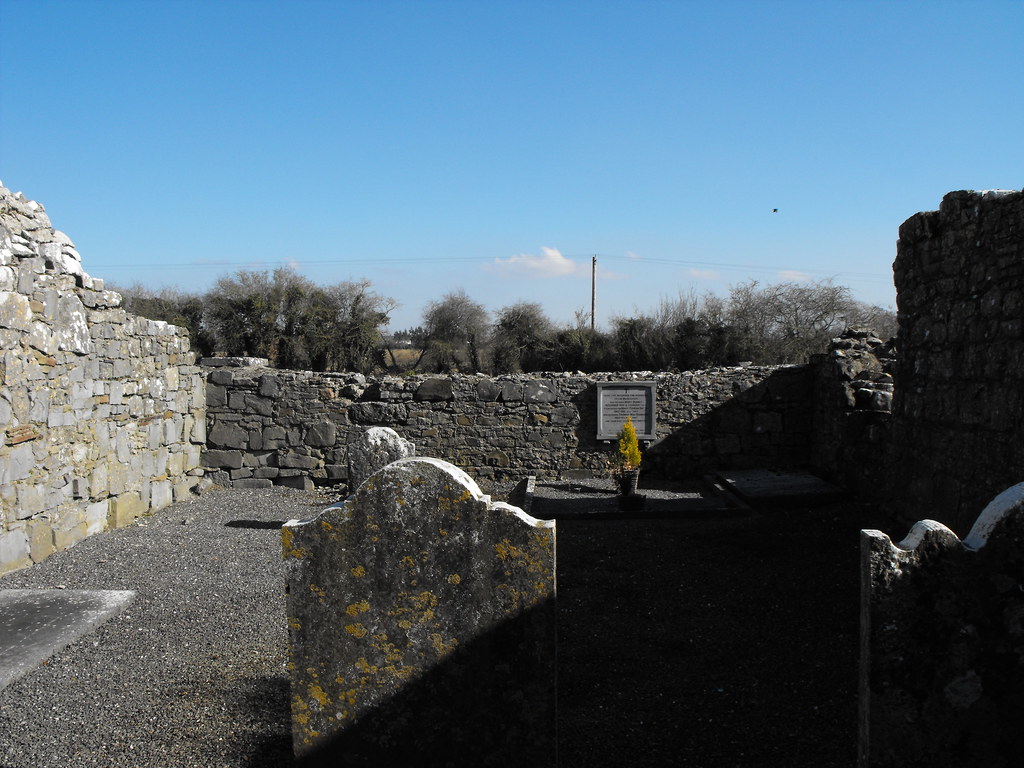
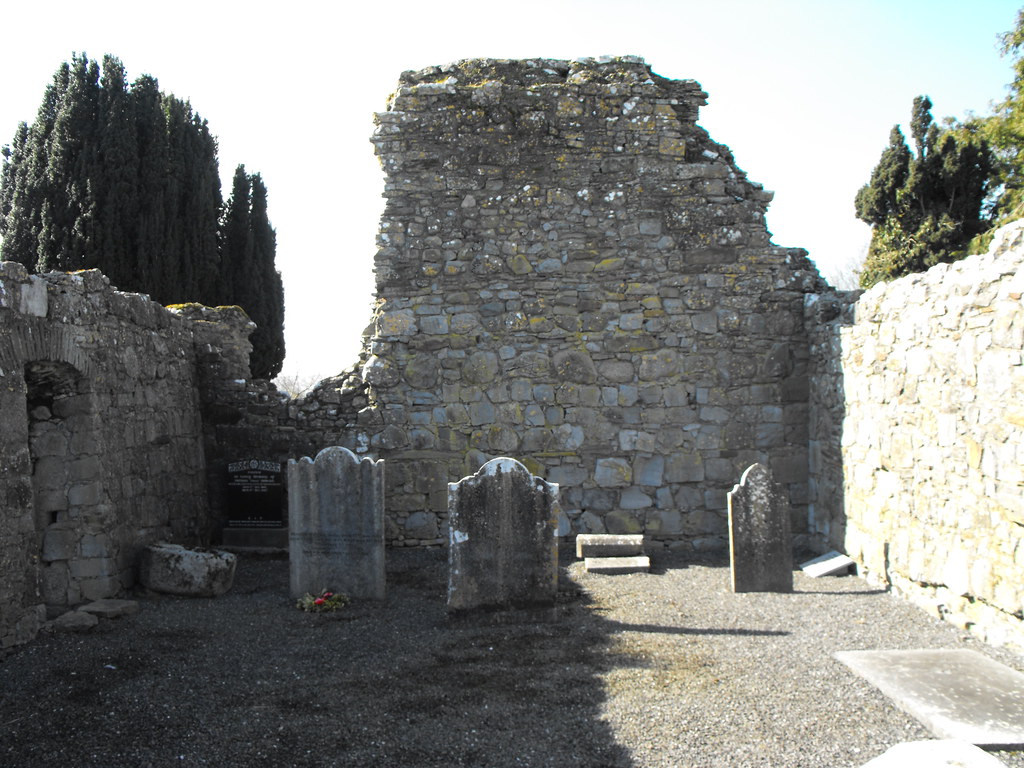
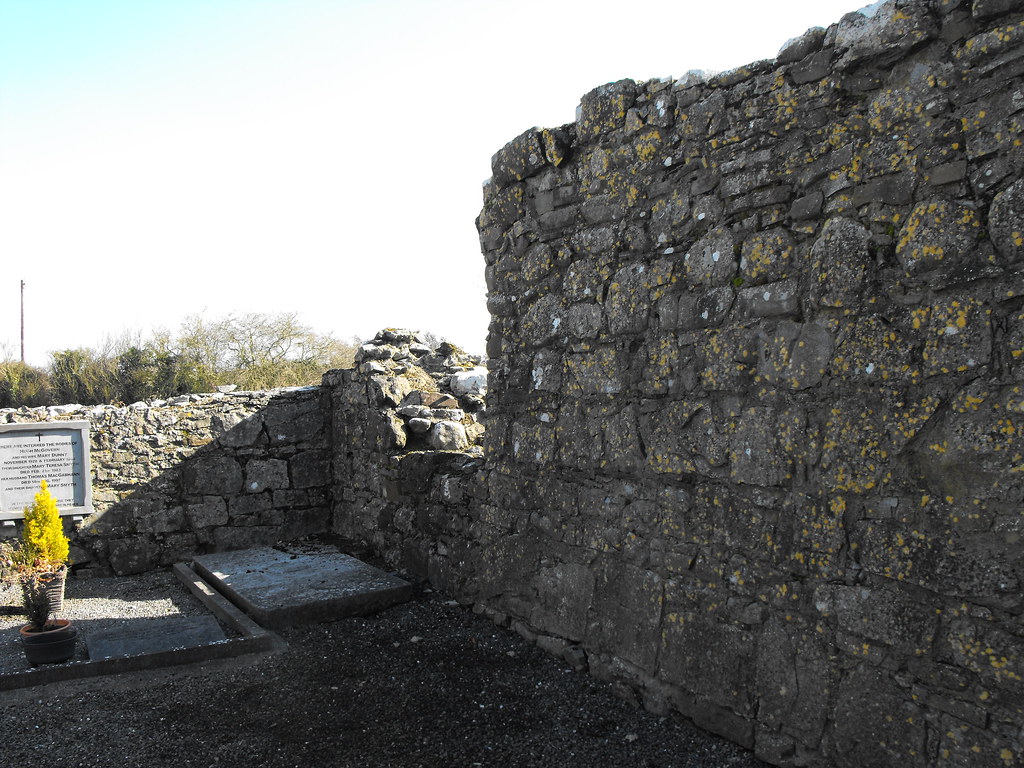
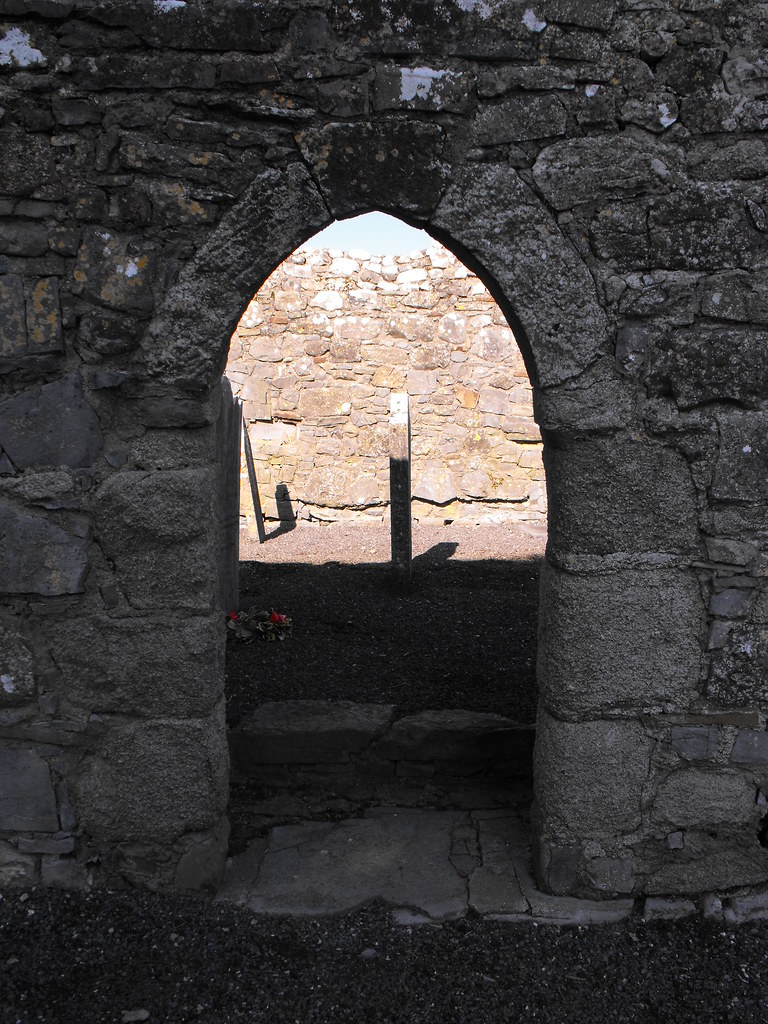
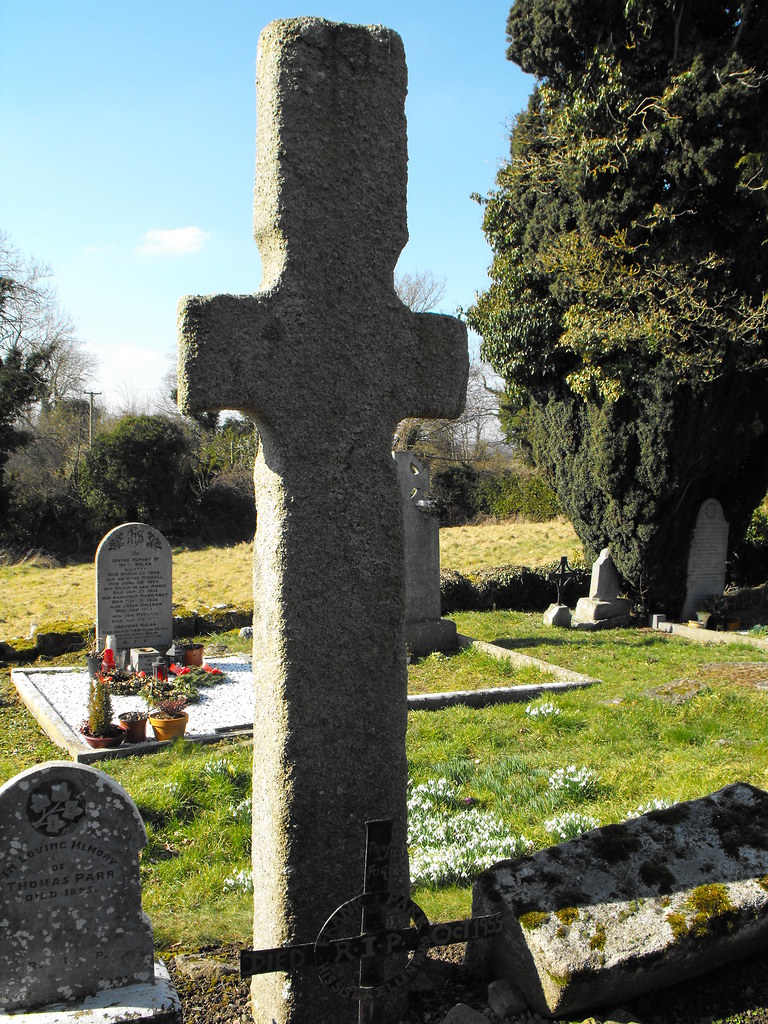
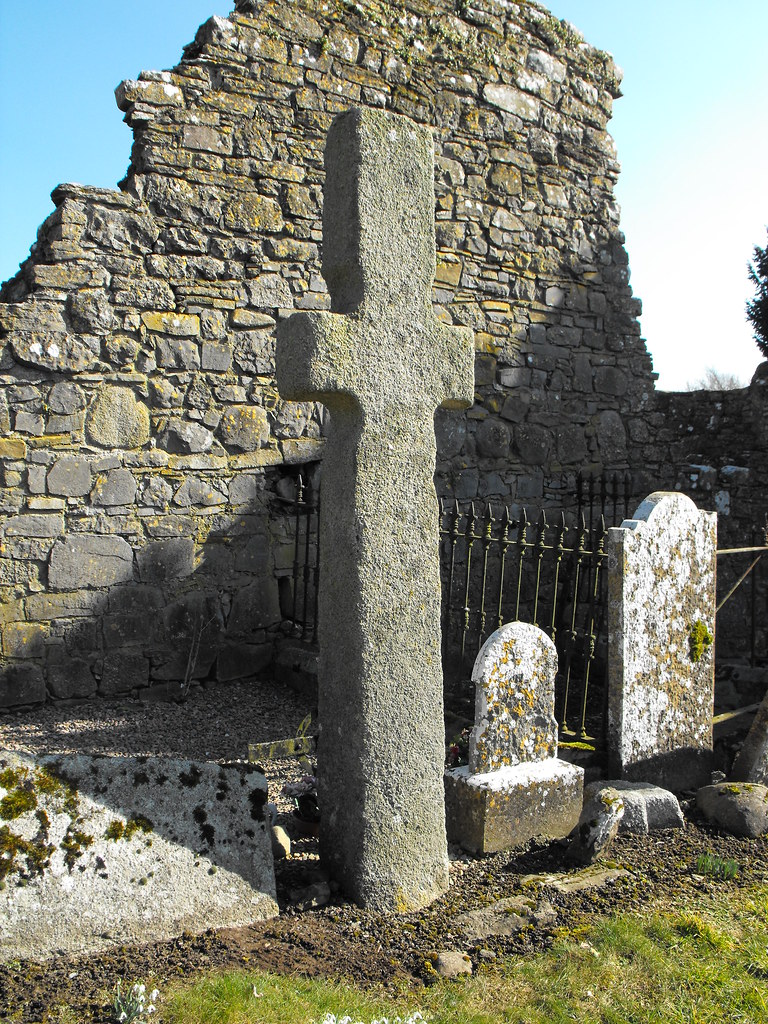
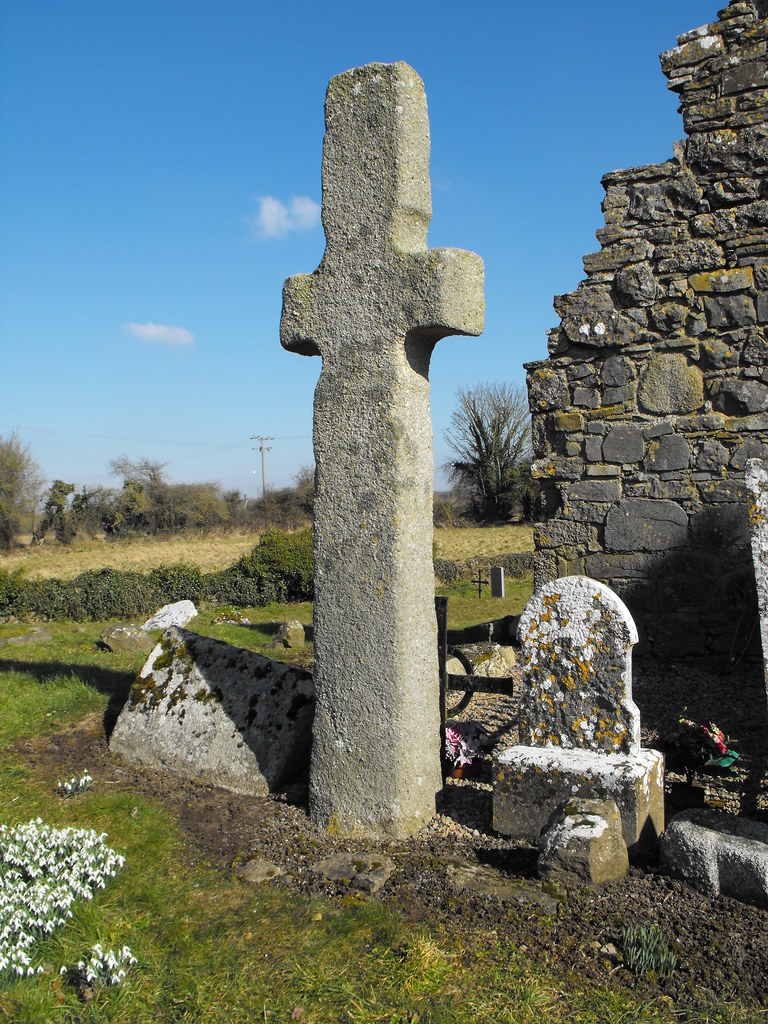
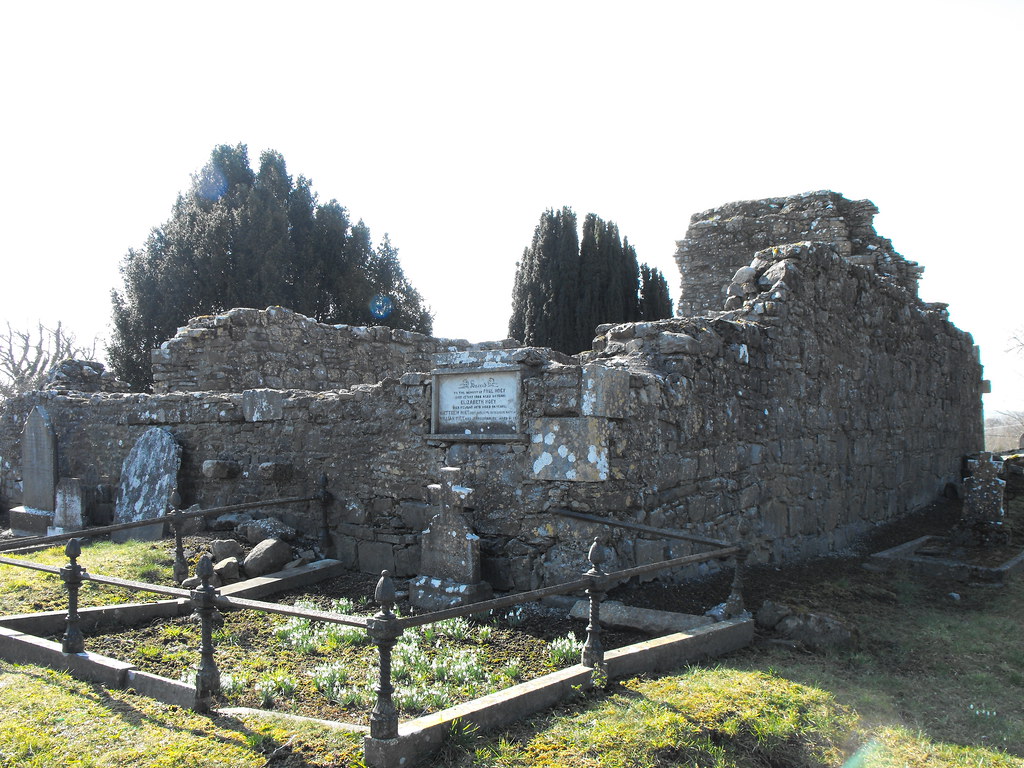
For this post I have selected a small church ruin North of Carlow town but inside County Laois. I particularly like this place because of the two early Christian crosses next to a much later ruin. You really get a sense of time here.


The original post can be read on 'The Standing Stone.'


Location – A few km north of Carlow town on the banks of the River Barrow.
OS: S 713 791 (map 61)
Longitude: 6° 56' 27.43" W
Latitude: 52° 51' 27.83" N
GPS: S 71327 79054 (Accuracy – 7m)
See map at the bottom of the page.

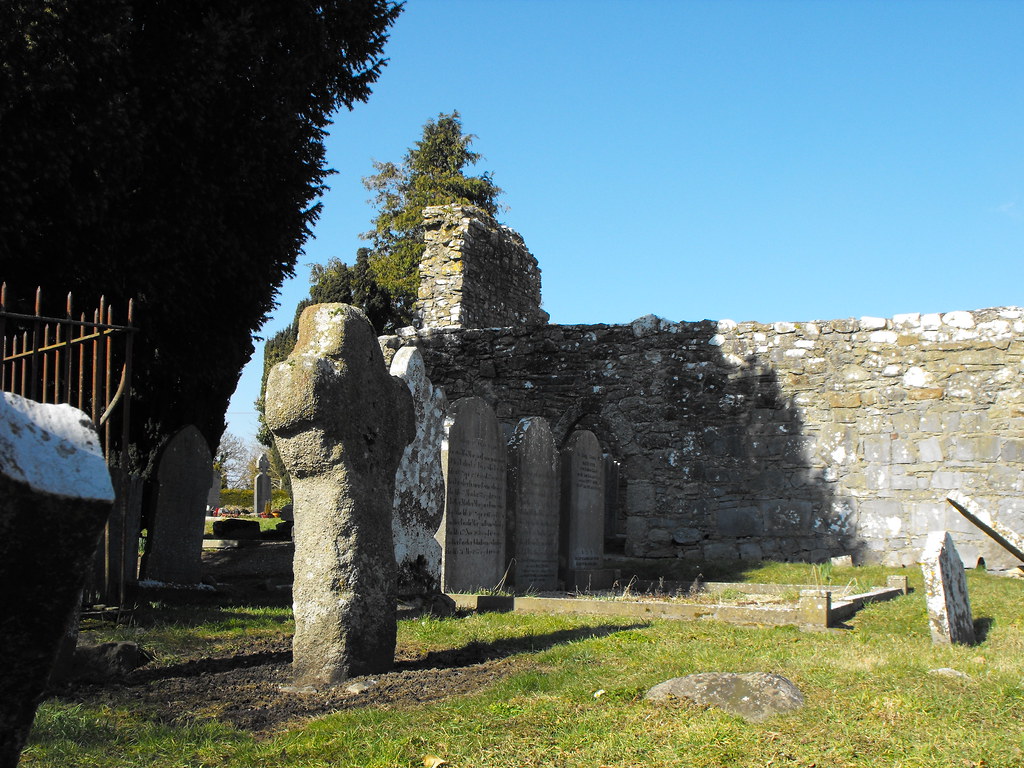
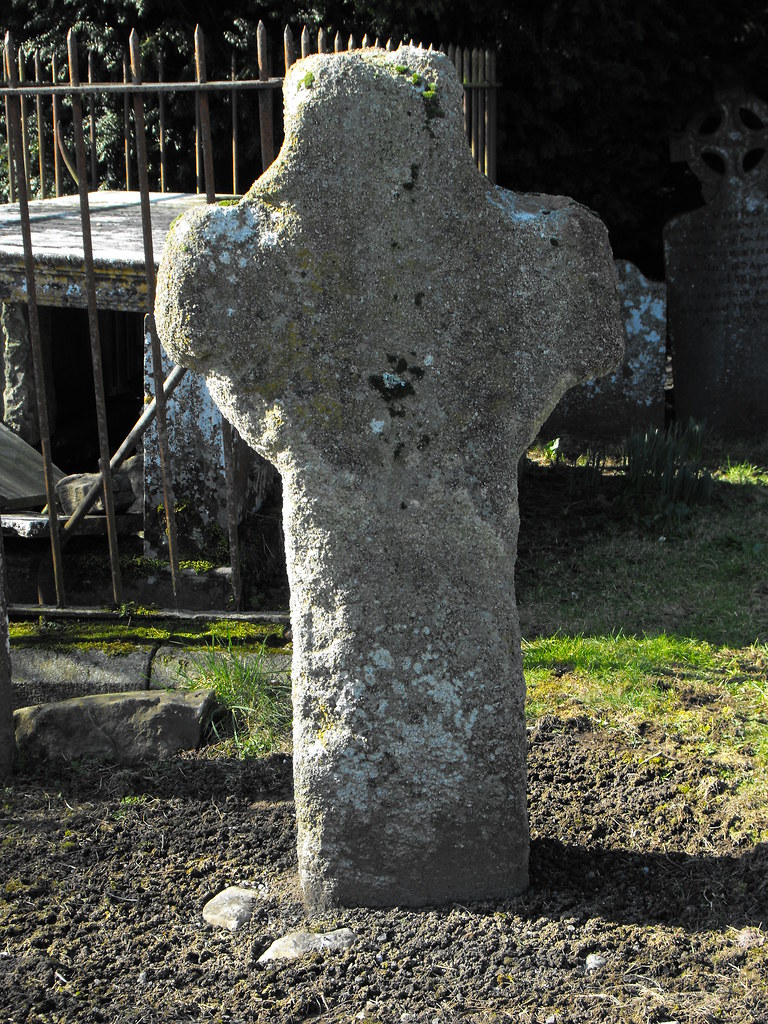
Description and History – The remains at Sleaty appear to be nothing out of the ordinary apart from the two early Christian crosses which betray its importance as the former residence of the Bishop of Leinster. This is a very early Christian foundation, of which only the two crosses remain. Associated with St. Fiacc the church is medieval in date, although some of the larger stones used in its construction may come from the earlier foundation. Large boulders were common in early Christian construction. The original monastery was on the other side of the river but when 60 monks died at the site (how I don’t know) it was moved to its present location. Aodh lived here in the 7th century who was one of the first biographers of St. Patrick. The last historical reference to the site is from 1055, after which the site lost importance.

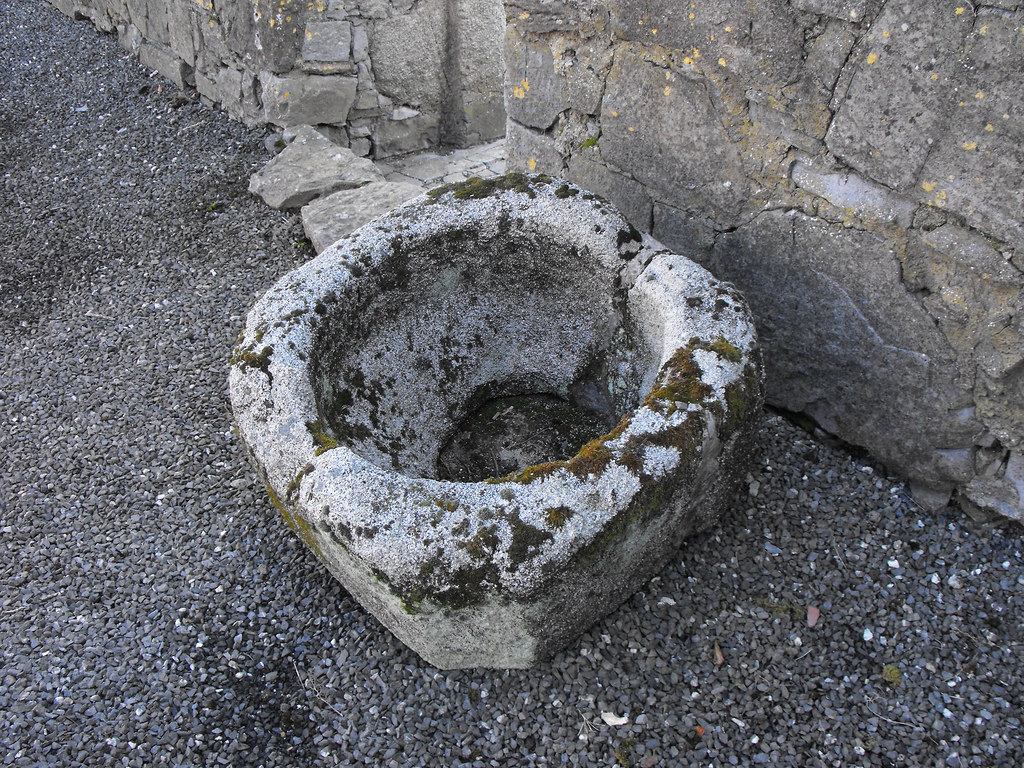
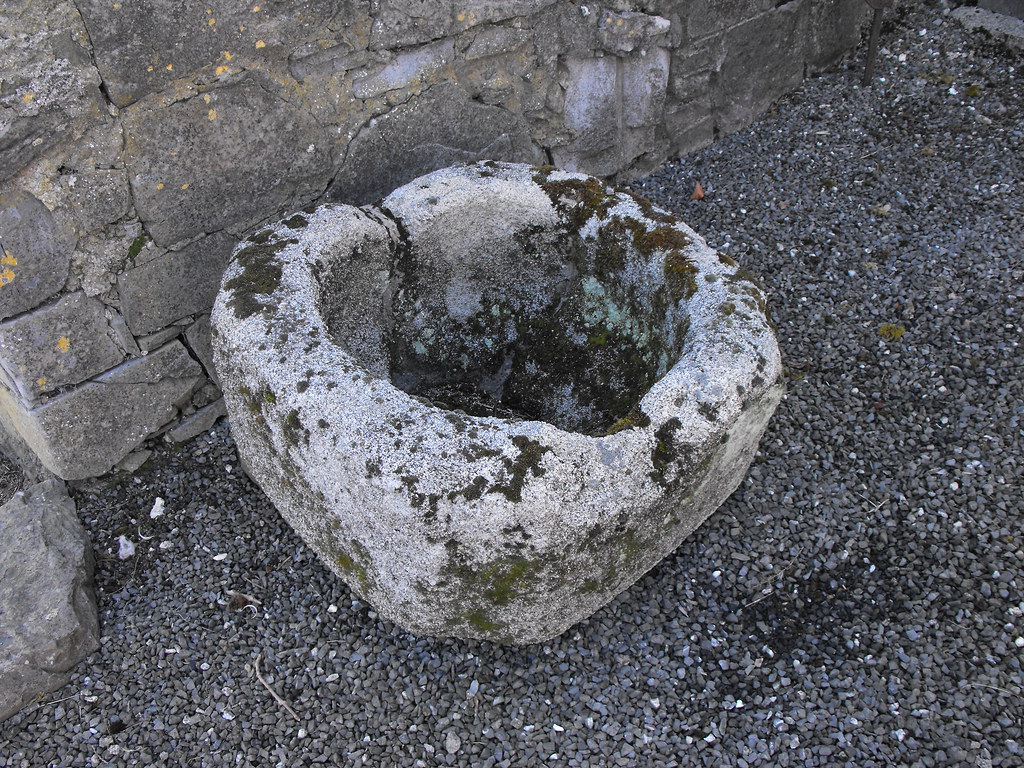
The medieval church is largely ruined and a stone font (date unknown) sits inside. The smaller of the two crosses from the earlier foundation is roughly 1.5m high and is decorated with a rough ringed cross. It is badly eroded and barely visible now. The second cross is 2.8m high and is undecorated. I had seen photographs of this cross before and you can’t really appreciate its size until you see it for yourself.
This is a nice little site and well worth the trip.

Difficulty – Easy enough to get around but it is set back from the road and easy to drive by without seeing. There is no parking here.
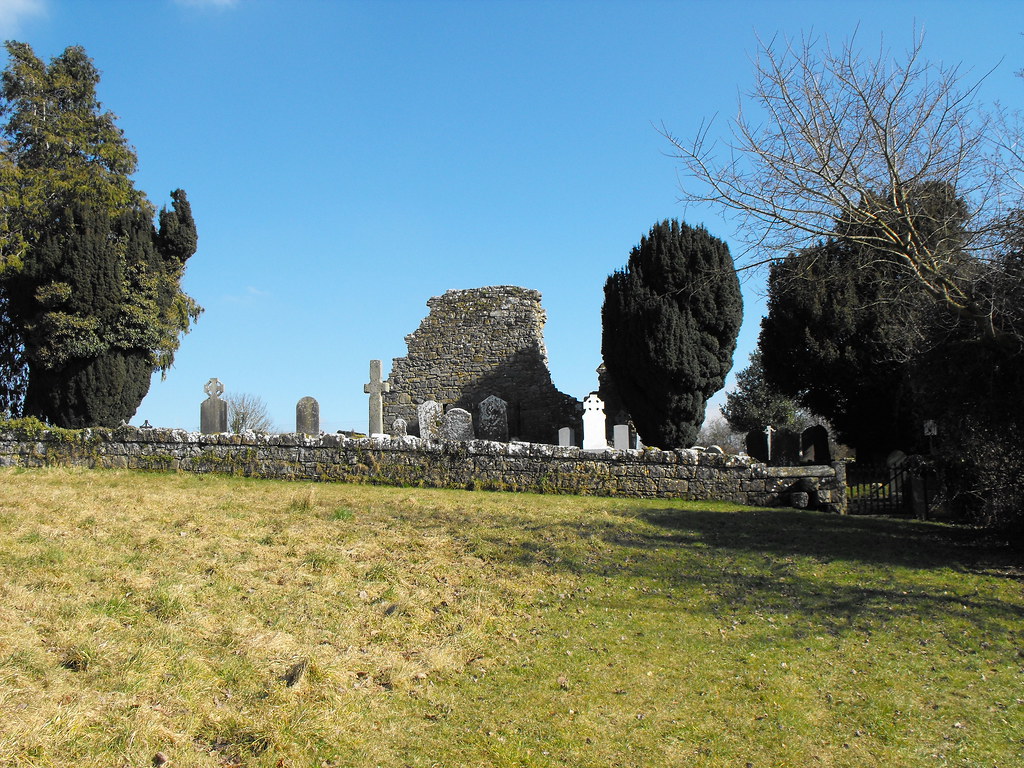
The churchyard from the roadway.

View The Standing Stone in a larger map

Sunday, 23 January 2011

Mass in the Church of St. Mary and the Angels

Instead of the annual pilgrimage to the Church of St. Paul on Dublin's Arran Quay, there was a Latin Mass in the Capuchin Church of St. Mary and the Angels just around the corner on Church St. It was held there because Ecclesia Dei - Ireland, another Latin Mass Association had had to postpone their 2010 AGM to 2011.


The foundation stone of the Church was laid on 12th June, 1868. It is build in a 14th century gothic style to the design of JJ McCarthy. It was dedicated in 1881 but not consecrated - there are no consecration crosses on the walls. JJ McCarthy was also responsible for St. Saviours (also 14th century gothic), Maynooth College Chapel, Mount Argus Church, Celbridge Parish Church and Kilcock Parish Church where the Latin Mass is sometimes celebrated.

The two side Altars to Our Lady and to St. Francis were installed in 1876. They were the work of Farrell and Sons, then of North Gloucester Street Lower (now Sean McDermott Street). Their most famous work in Dublin is the monuments to Archbishop Troy and Cardinal Cullen in the Pro-Cathedral, the statues of Sir John Grey and William Smith O'Brien on O'Connell St. and the sculptural aspects of Refugium Peccatorum in Rathmines.

A beautiful Sacred Heart Chapel used to run the length of the Church to the north. It was built in 1908-9 but was enclosed and converted into a large sacristy and parish hall a few years ago.


Queen of Angels, pray for us!

Saturday, 22 January 2011

Beatification Report - Bl. John Henry Newman Shrine and Exhibits

As part of its celebrations of the beatification of its founder, Cardinal John Henry Newman , the Birmingham Oratory opened its shrine dedicated to Newman.


The first pilgrim to pray at the shrine was the Holy Father, who visited the Oratory following the beatification Mass. Formerly St Phillip's Chapel, it was refurbished before being rededicated to Newman. The refurbishment was carried out by International Fine Art Conservation Studios and consisted of laying a new floor and some redecoration whilst preserving older decoration in some areas. The new elements echo the Oratory's baroque style and include stencilled designs.


The Shrine contains a number of relics taken from Newman's grave. Over the altar hangs a copy of Walter Ouless's portrait of Newman, the original of which is in the possession of the Oratory.

A considerable amount of work has clearly gone into the detail of the shrine. A particularly nice touch is design of the lamps to resemble a Cardinal's galero.


Since its opening the shrine has played host to many other pilgrims following in the Holy Father’s footsteps. Some have emulated him by admiring another of the Oratory’s increasingly famous residents, Pushkin. Pushkin is a delightful black Persian cat that has risen to fame since he was featured across the media as the recipient of the Pope’s attention and now even gets his own fan mail.


For those able to visit, the shrine is open whenever the Church is, usually before and after Mass, Saturday and Sunday. A pilgrims’ Mass is held in the shrine at 11am on Saturday mornings.


The Birmingham Oratory’s shrine is one of many erected or commissioned over recent months in memory of Newman; these include the London (Brompton) Oratory and Oxford Oratory as well as places as far afield as New York.


Also at the Oratory is a small exhibition of Newman’s personal items (generally only open at weekends). It features information about Newman’s life largely taken from some very effective poster versions of sections from Father Beaumont’s official beatification biography, a very interesting book. Hopefully soon the displays will be augmented with the items from the Newman Exhibition at the Birmingham Museum, as this featured some truly stunning pieces, photographs of which can be seen here.


This is the conclusion to my series of reports about Cardinal John Henry Newman, his beatification and the events that took place as part of its celebration; links to the earlier posts are listed below. As there are already reports of a second miracle being investigated it appears we may reasonably be hopeful that the sequel to this series may be appearing in the not too distant future!

Life of John Henry Newman
Newman and Birmingham Lecture
Cardinal Newman Exhibition
JH Newman and his Biographers, Official Beatification Conference
Performance of The Dream of Gerontius
Beatification of Cardinal Newman
Newman the Authorised Biography


Saturday, 15 January 2011

Eighth Annual Pilgrimage to Kildare

Pilgrimage in honour of St. Brigid of Kildare on Saturday 26th February 2010.

Procession to St. Brigid's Well, Tully, departs from St. Brigid's Parish Church Kildare Town at 12.30 p.m.

Mass in the Traditional Latin Rite in St. Brigid's Parish Church Kildare Town at 2.30 p.m. followed by Benediction.

A Map of the locality can be found here.

Thursday, 13 January 2011

St. Knut's Day - The Last Day of Christmas in Sweden

Today is the feast of St. Hilary of Poitiers but in Sweden it is celebrated as the Twentieth Day of Christmas and the feast day of St. Knut (Tjugondag Knut). Other countries may celebrate the twelve days of Christmas ending on the 6th of January but in Scandanavia we celebrate the twenty days of Christmas ending today. Today was obviously a special day in ancient times because the feast day of St. Hilary gives the name to the whole academic term in many Universities and even in some Legal Systems around the world. It is also interesting that the liturgical season of Christmas that once lasted a whole forty days until Candlemas on the 2nd of February was shortened to the twenty days and ended on 13th January in the new rubrics of Blessed Pope John XXIII (VIII De Anni Temporibus N. 72).

The St. Knut who is celebrated was King Knut or Canute IV of Denmark, which, in those days, included Sweden and Norway too. His uncle had been the King Canute who also ruled England so the era we are talking about is the end of the Viking era and the beginning of the modern (and Christian) era in Scandanavia. The feast isn't really celebrated in Denmark maybe because Canute was very ambitious and warlike and the nobles of Denmark, who elected his half-brother to be king before Canute, were tired of the war and war taxes that he introduced. He attempted to invade England to regain his uncle's crown and he assembled the last Viking army and fleet ever to be assembled but delay meant that the invasion wasn't a success.

However, the feast is an important day in the calendar of Norway and Sweden. King Canute was a devout Catholic who strongly supported the Church. He was martyred in the year 1086. There was some interesting research some years ago on his bones buried in the Cathedral of Odense on the Island of Funen, where he was martyred. It showed that he died of a single wound from the sacrum through the abdomen and with no signs of struggle, seeming to confirm the account of his death without a struggle from a lance wound. Soon after his death King Canute's reputation for holiness and the miracles reported to happen at his grave caused him to be regarded as a saint. His reputation became so great that in 1101 Pope Pascal II recognised public devotion to him.


However, this day isn't really his feast day, which is in July but it is the day that he is remembered because it is the last of the twenty days that he decreed should be celebrated as the Christmas season. It is another date in the Christian Calendar that we Swedes celebrate but in a different way and at a different time, like the feast of All Souls and how we celebrate the eve of Christmas and the eve of Easter and the eve of St. Walpurga's Day.

As usual with Swedish feasts, there are special songs. One tells us the meaning of the feast:

På Tjugondag Knut dansas julen ut och då plundras och kasseras granen.

This translates to "on St. Knut’s day, dance Christmas away and then plunder and scrap the spruce tree".

On this day we obey the law of St. Knut by plundering the Christmas tree of its decorations (especially the chocolate ones!) and drive out Christmas by throwing the Christmas tree out (usually through the window) and singing that rhyme. We also knock on the walls to scare out any Jultomten who are hiding in the house! Sometimes there is a man dressed as “Knut” in a kind of crazy ragged costume who helps to sweep out Christmas.

Another song of St. Knut's Day was written by Sigrid Sköldberg-Pettersson and reminds me of the frog song for St. John's Day: It's really a song that is sung during the whole Christmas season (starting from St. Lucy's Day) but the last verse is especially about today.

Raska fötter springa tripp, tripp, tripp!
Mamma har så bråttom klipp, klipp, klipp!
Juleklappar lackas in.
Dörren stängs för näsan din.
Det är bara roligt.

Pappa har gått ut i sta'n, sta'n, sta'n;
Köper där en präktig gran, gran, gran.
Den skall hängas riktigt full,
Först en stjärna utav gull,
Nötter sen och äpplen

Se nu är ju allting klart, klart, klart.
Barnen rusa in med fart, fart, fart.
Vem står där i pappas rock?
Jo, det är vår julebock.
Han har säkert klappar.

Alla barnen ropa: "Ack, ack, ack;
Snälla rara pappa, tack, tack, tack"!
Margit får en docka stor.
Gungehäst får lille bror.
Stina får en kälke.

Snart är glada julen slut, slut, slut.
Julegranen bäres ut, ut, ut.
Men till nästa år igen
Kommer han vår gamle vän,
Ty det har han lovat.

This translates to:

Rushing feet run tripp, tripp, tripp!
Mother is so busy cut, cut, cut.
Christmas gifts are wrapped.
The door is closed before your nose.
But it is all fun.

Daddy has gone to town, town, town;
To buy a grand Christmas tree, tree, tree.
It is going to be well-decorated,
first a star of gold,
followed by nuts, and apples.

Look, everything is done, done, done.
The children rush in with speed, speed, speed.
Who is standing there in father's coat?
Yes, it is our Christmas goat.
I'm sure he's got presents.

All the children shout Oh dear, oh dear, oh dear.
Dear Daddy, thanks, thanks, thanks!
Margit has got a big doll.
Rocking horse for little brother.
Stina gets a toboggan.

Soon the lovely Christmas is at an end, end, end.
The Christmas tree is carried out, out, out.
But next Christmas once again
Our old friend will return.
Because he promised!


There really isn't a good choice on YouTube for this song but this is the best. The second song is about the arrival of the snow... so a real Autumn song in Sweden!

Saint Hilary of Poitiers and the Irish Church


January 13 is the feastday of one of the great Western fathers of the Church- Hilary of Poitiers. As O'Hanlon remarks in his Lives of the Irish Saints:
The Irish, from the very earliest period of their Christian initiation, entertained the highest veneration for this illustrious saint. They even contrived to spread his fame in Scotland, and on the Continent of Europe.... Into biographical particulars, the scope of this work will not enable us to enter; but as many ancient offices, antiphonaries, and calendars of Ireland have his name inscribed, we could not wholly omit to notice him.

The Martyrology of Oengus records:
13. We shall have their blessing!
a strong prayer without importunity:
Sulpicius (Severus) famous, delightful,
(and) Hilary abbot of Poitou.

Saint Oengus has thus acknowledged the link between the abbot of Poitiers and the biographer of Saint Martin of Tours, Sulpicius Severus, because his writings also helped to promote the cult of Saint Hilary. The Life of Saint Martin by Sulpicius Severus was a well-loved text in Ireland and a complete copy of it is preserved in the Book of Armagh, written about the year 900. But Saint Hilary also features in a number of other sources which I will summarize below:

1. The Irish Liber Hymnorum. Saint Hilary is credited with being one of the first hymn writers, who introduced some of the hymnology of the Eastern Church when he returned to Europe. He is thus credited with the authorship of one of the most popular hymns of the Early Irish Church - Hymnum Dicat Turba Fratrum, a hymn on the life of Christ. This hymn is preserved in ten different manuscript sources dating from the seventh to the thirteenth century. It is the very first hymn transcribed in the Bangor Antiphonary, where it appears under the title Ymnum Sancti Hilari de Christo, five other manuscripts also attribute it to Saint Hilary as does the ninth-century Hincmar of Rheims. The 19th-century translators of the Irish Liber Hymnorum accepted the attribution of this hymn to Saint Hilary, but modern scholars have argued that it may actually be the composition of a native author. Such is the view of Father Michael Curran, MSC, who writes:
I believe that Hymnum dicat was written by an Irish man at the end of the sixth century. .. Prudentius had written a hymn on the life of Christ .. An Irishman got to know this hymn and liked it so much that he decided to write a similar work, one that would be at once simpler and more in keeping with the needs and aspirations of Irish prayer.

The popularity of the hymn in Ireland testifies to the signal success of the author; the hymn became the favourite expression of Irish piety and prayer of Christ the King. They, or perhaps the author himself, gave St Hilary the honour of writing it, and no doubt this too contributed to its authority and popularity. Irish monks propagated it in Britain and on the continent from the seventh century onwards. It was known and cited by Hincmar of Rheims and by Bede, and its presence was felt in Spain possibly as late as the tenth century.

Yet, even if it is true that the Hymnum Dicat is an Irish composition, it is still indicative of the respect which Saint Hilary commanded in Ireland that authorship was attributed to him.

2. The List of Parallel Saints. Staying on the theme of Saint Hilary as a hymnographer, it is worth noting that in the list of parallel saints, Saint Sechnall, reputed author of the hymn in praise of Saint Patrick, Audite Omnes Amantes, is equated with Saint Hilary. The list records: Hilary, bishop and sage = Bishop Sechnall.

3. Irish Psalm Commentaries. Saint Hilary in his role as a patristic commentator on the Psalms was also well-known to the Irish Church. The Irish from early times referred to the Psalms as 'the three fifties', a designation already used by Saint Hilary. He is cited as an authority in the Treatise on the Psalter in Old Irish and texts of Saint Hilary are used along with those of other Church Fathers in other Irish commentaries. Father Martin McNamara's collection of studies The Psalms in the Early Irish Church published in 2000 contains details of these various texts. Curiously he too suggests that in addition to the actual Saint Hilary of Poitiers there may also have been an Irish Hilary, as some of the texts and views attributed to 'Hilary' in these sources cannot be traced back to the saintly bishop of Poitiers. Indeed on at least two occasions, the author of the Treatise 'attributes views to Hilary that are the direct opposite of those held by the saint'.

4. The Stowe Missal. Saint Hilary appears in the litany of the saints which is part of the eucharistic rite preserved in the Stowe Missal. He was not part of the original text of the Missal, which confined the group of saints to the Mother of God and the Apostles, but was added by a later scribe Moel Caich. He expanded the Litany to include some famous names of the universal church - Saints Stephen, Martin, Jerome, Augustine, Gregory and Hilary- before going on to list over twenty Irish saints. Thomas O'Loughlin in his study, The Stowe Missal: The Eucharist as Refreshment, comments:
That he should include 'the greats' of the western church is not surprising: the cult of Martin was ubiquitous, Steven as first martyr likewise, and in a monastery the great writing saints Jerome, Augustine, Hilary and the monk-doctor Gregory would have been the saints held in the greatest honour for their wisdom and holiness.

5. Personal Devotion to Saint Hilary by Irish Saints. As a final testimony to Irish regard for Saint Hilary, there is the personal devotion by one particular Irish saint, Fridolin, an early missionary to Europe. He commenced his labours in Poitiers and was so devoted to the memory of its patron that he sought out the lost relics of Saint Hilary. Fridolin had a vision of Saint Hilary in which the location of the relics was revealed to him and he was able to have them solemnly translated into a shrine at the restored church at Poitiers. Saint Hilary further appeared to the Irishman and directed him to journey on towards Germany, where he eventually founded the monastery of Säckingen, dedicated, of course, to Saint Hilary.

References

Michael Curran, MSC., The Antiphonary of Bangor (Irish Academic Press, 1984), 33-34.
Martin McNamara, The Psalms in the Early Irish Church. (2000), 56-7.
Rev. John O'Hanlon, Lives of the Irish Saints, Volume 1 (Dublin 1875), 190.
Thomas O'Loughlin, Celtic Theology: Humanity, World, and God in Early Irish Writings (Continuum, 2000), 139.

This post was first published here.

Saturday, 8 January 2011

Fourth Monthly Mass in St. Joseph's Church, Berkeley Road

Ever since October 2010 there has been a monthly Extraordinary Form Mass in St. Joseph's Church on Berkeley Road Dublin 7 that is staffed by the Discalced Carmelites. It is celebrated at 12 noon on the second Saturday every month. The whole Church is beautiful but the Extraordinary Form Mass is celebrated at the stunning side altar of Our Lady.


Thursday, 6 January 2011

Trettondag Jul - Epiphany in Sweden

The Epiphany, the feast of the Three Holy Kings, known in Swedish as Trettondedag Jul (Thirteenth day of Christmas, just as the day after Christmas Day is Annandag Jul, Second day of Christmas) is the most controversial of our Christian Public holidays. The "Almega" employers union disapproves of the religious theme of the holiday - nothing to do with having to give employees a day off of course!

Public holidays in Sweden are called Röda Dagar (Red Days, just like "red letter days") because the important Church feasts were marked in red in Church calendars. There are 13 Red Days. They are Nyårsdagen (New Year's Day), Trettondedag Jul (Epiphany), Langfredagen (Good Friday), Påskdagen (Easter Monday) Forsta Maj (1st May), Kristi Himmelsfardsdag (Ascension Day), Pingst (Pentecost Sunday) - Annandag Pingst (Pentecost Monday) was a Red Day but was replaced by - Sveriges Nationaldag (Swedish National Day, 6th June), Midsommardagen (Midsummer Day on the Saturday between 20th and 26th June), Alla Helgons Dag (All Saints/Souls Day on the Saturday between 31st October and 6th November), Juldagen (Christmas Day) and Annandag Jul (26th December).

Everyone in Sweden also celebrates a few other days like Julafton (Christmas Eve), Midsommarafton (Midsummer Eve) and Nyårsafton (New Years Eve) as full holidays and Trettondagsafton (Epiphany Eve), Skärtorsdagen (Easter Thursday), Påskafton (Easter Saturday), Valborgsmässoafton (Walpurgis Eve), Kristi Himmelsfärdsdag (Ascension Eve), and Allhelgonaafton (All Saints/Souls Eve) as half holidays. Also, if the Red Day falls on a Tuesday or Thursday we take the Klämdag (squeeze day between the Red Day and the weekend) as a holiday too!

Only 1st May, the Swedish National Day and Midsummer are not Christian Days, unless you include the feast day of St. Joseph the Workman and the election of King Gustavs I Vasa, who founded the Reformation in Sweden, and the feast day of St. John the Baptist as Christian Days!

Back to the Epiphany or Thirteenth Day of Christmas. It was celebrated in Sweden during the Middle Ages with Mystery Plays. It used to be the day that stjärngossar (Star Boys) dressed in white with cone hats with stars on would put on pageants of the journey of the Three Kings to Bethlehem and they would make a procession from house to house. Balthazar carried a star lantern on a pole and Caspar and Melchior would carry swords. The other children dressed as biblical characters. All would go singing songs and hymns and collecting gifts. The most famous of these biblical characters was always Judas in a big beard. The one dressed as Judas would jingle a bag with the 30 pieces of silver he received for betraying Jesus.

In Sweden today children dress as stjärngossar on Luciadag (St. Lucy's Day) instead but in a few places in Norway they can still be seen on Epiphany.

Friday, 31 December 2010

Father Prout

Today is the birthday of Francis Sylvester Mahony known as 'Father Prout'. With a nom de blog like mine, the thought came to me that I ought to make some tribute to the author of The Bells of Shandon. As it turned out, his story brings side-lights into many of the stories that I have already published.

The Catholic Encyclopedia gives a good biography upon which the authors of wikipedia have been unable to improve and which the Diocese of Cork and Ross has adopted in its entirity. The most notable points are that having studied with the Jesuits in Clongowes Wood, he spent a few years as a novice with them and became a teacher of rhetoric at his own school, the great Canon Sheehan being one of his pupils, but he was dismissed for leading some of the students on a drunken outing to Celbridge. He studied in a variety of Continental Seminaries and was ordained at Lucca in Italy in 1832, against all advice. He returned to his native Diocese, where he served as a zealous and hardworking hospital chaplain during a cholera epidemic, where he won the life-long friendship and admiration of Father Mathew, the Capuchin Temperance campaigner. Among the ecclesiastical misadventures of 'Father Prout' was to be the attempt to have Father Mathew made Bishop of Cork!

The misadventure that led to Father Mahony's leaving the Diocese - and the active Priesthood - was his campaign to be given the living of 'the brickfield chapel,' that was to become St. Patrick's Church on the Lower Glanmire Road, then a chapel-of-ease to the Cathedral Parish. Father Mahony had been the principal fundraiser for the building of the new Church, which, I think you'll agree, is a fine building, and a magnificent achievement that was virtually the first new Church built in the City in two generations. The disappointment of Father Mahony, who had proved himself apostolic and capable, was understandable, especially when met with the immovable object of Bishop Murphy (r. 1815 - 1847).

He moved to London and held his own amid the literary greats of the time, although his name is now 'writ in water.' We read in The Catholic Encyclopedia: "Dowered with a retentive memory, irrepressible humor, large powers of expression, and a strongly satiric turn of mind, an omnivorous reader, well-trained in the Latin classics, thoroughly at home in the French and Italian languages, and a ready writer of rhythmic verse in English, Latin, and French, he produced... an extraordinary mixture of erudition, fancy, and wit, such as is practically without precise parallel in contemporary literature. The best of his work appeared in "Fraser's Magazine" during the first three years of his literary life. He translated largely from Horace, and the poets of France and Italy, including a complete and free metrical rendering of Gresset's famous mocking poem "Vert-Vert" and Jerome Vida's "Silkworm". But his newspaper correspondence from Rome and Paris is notable chiefly for the vigours of his criticisms upon men and measures, expressed, as these were, in most caustic language."

The Catholic Encyclopedia is not noted for its forgiving tone towards renegades but it expresses itself generously towards Mahony: "Although for thirty years Mahony did not exercise his priestly duties, he never wavered in his deep loyalty to the church, recited his Office daily, and received the last sacraments at the hands of his old friend, Abbé Rogerson, who left abundant testimony of his excellent dispositions."

His roguish humour caused him to adopt the name of a certain Father Prout of Watergrasshill as his nom de plume.

The original Father Prout had been forced from his Diocese (Cashel) on account of a wrangle with Archbishop Butler over his refusal to agree to the amalgamation of his Parish, which he described as "the greatest injustice since the partition of Poland." Fortunately, he was welcomed into the neighbouring Diocese of Cork by Dr. Moylan.

Mahony's fictional Father Prout seems no less sanguine, although he claimed to be a French-educated parish priest, the son of Dean Swift and Stella, who writes works such as The Apology for Lent in scholarly praise of fish!

When he died on 18th May, 1866, as we have read, fortified by the rites of Holy Mother Church, his body was taken back to Cork for a Solemn Requiem Mass in St. Patrick's Church "the church which", in the words of his biographers, "was the dream of his impetuous youth," as his biography says, from where he was taken to his family vault in St. Ann's Churchyard, Shandon, to be buried in the shadow of the bells he immortalized.


The Reliques of Father Prout, is perhaps his most famous work and it is in that collection that his true claim to fame, The Bells of Shandon, is to be found as part of The Rogueries of Tom Moore.

In my opinion, it is the true anthem of Cork, although the words of The Banks and Beautiful City were handed out to every school child in the city by the Lord Mayor last year! The Bells has none of those shameless hussies pressing wild daisies and Beautiful City lifts "the sweet bells of Shandon were dear to my mind." I may stand on a Shandon Belle ticket in the next mayoral election!

The clip consists of that fine ecumenical anthem Iníon an Phailitínigh (a Kerry song, mind you) and a verse of The Bells sung by Seán Ó Sé, whose own voice is another contender to be the true anthem of Cork!

THE BELLS OF SHANDON

With deep affection
And recollection
I often think of
Those Shandon bells,
Whose sounds so wild would,
In the days of childhood,
Fling round my cradle
Their magic spells.
On this I ponder
Where'er I wander,
And thus grow fonder,
Sweet Cork, of thee ;
With thy bells of Shandon,
That sound so grand on
The pleasant waters
Of the river Lee.

I've heard bells chiming
Full many a clime in,
Tolling sublime in
Cathedral shrine,
While at a glibe rate
Brass tongues would vibrate —
But all their music
Spoke naught like thine ;
For memory dwelling
On each proud swelling
Of thy belfry knelling
Its bold notes free,
Made the bells of Shandon
Sound far more grand on
The pleasant waters
Of the river Lee.

I've heard bells tolling
Old "Adrian's Mole" in,
Their thunder rolling
From the Vatican,
And cymbals glorious
Swinging uproarious
In the gorgeous turrets
Of Notre Dame ;
But thy sounds were sweeter
Than the dome of Peter
Flings o'er the Tiber,
Pealing solemnly ; —
O! the bells of Shandon
Sound far more grand on
The pleasant waters
Of the river Lee.

There 's a bell in Moscow,
While on tower and kiosk o !
In Saint Sophia
The Turkman gets,
And loud in air
Calls men to prayer
From the tapering summit
Of tall minarets.
Such empty phantom
I freely grant them ;
But there is an anthem
More dear to me, —
'Tis the bells of Shandon
That sound so grand on
The pleasant waters
Of the river Lee.

Tuesday, 28 December 2010

The Massacre of the Innocents in Irish Sources

The Martyrology of Oengus devotes its entire entry for December 28 to the commemoration of The Massacre of the Innocents by King Herod:

28. Famous is their eternal acclamation,
beyond every loveable band,
which the little children from Bethlehem
sing above to their Father.

to which the scholiast has added a commentary:

28. Famous the lasting acclamation, i.e. famous and lasting is the shout of the children who were killed in Bethlehem by Herod pro Christo.
a loveable band, i.e. they are a dear band propter innocentiam.
who sing above to their Father, i.e. canunt laudes, etc.
A hundred and forty - bright fulfilment - and two thousands of children
were slain in Bethlehem with victory by the ruler, by Herod.
Thirty plains famous, pleasant, all about Bethlehem ;
in every plain were slain a hundred of the pleasant children of the nobles ;
a hundred and forty - sad the doom ! - in Bethlehem alone.

The Massacre of the Innocents is also commemorated in other Irish sources, appearing, for example, in the poems of Blathmac. He records in the first of his poems translated by James Carney:

20. In seeking Christ (pitiful this!) the infants of Bethlehem were slain. It was by Herod (bloodier than any prince!) that they were put to the blue sword.

21. Happy the good gentle infants! They have happiness in an eternal kingdom: Herod, miserable creature, has eternal sorrow and eternal Hell.

James Carney, ed. and trans., The poems of Blathmac, son of Cú Brettan: Together with the Irish Gospel of Thomas and a poem on the Virgin Mary (Dublin, 1964), 9.

Below is the text of another poem, found in the Leabhar Breac, which reflects the raw pain of the bereaved mothers and the sheer horror of the deed:

The Mothers’ Lament at the Slaughter of the Innocents

Then, as she plucked her son from her
breast for the executioner, one of the women said:
‘Why do you tear from me my darling son,
The fruit of my womb?
It was I who bore him, he drank my breast.
My womb carried him about, he sucked my vitals.
He filled my heart:
He was my life, ’tis death to have him taken from me.
My strength has ebbed,
My voice is stopped,
My eyes are blinded.’
Then another woman said:
‘It is my son you take from me.
I did not do the evil,
But kill me — me: don’t kill my son!
My breasts are sapless, my eyes are wet,
My hands shake,
My poor body totters.
My husband has no son,
And I no strength;
My life is worth — death.
Oh, my one son, my God!
His foster-father has lost his hire.
My birthless sicknesses with no requital until Doom.
My breasts are silent,
My heart is wrung.’
Then said another woman:
‘Ye are seeking to kill one; ye are killing many.
Infants ye slay, fathers ye wound; you kill the mothers.
Hell with your deed is full, heaven shut.
Ye have spilt the blood of guiltless innocents.’
And yet another woman said:
‘O Christ, come to me!
With my son take my soul quickly:
O Great Mary, Mother of the Son of God,
What shall I do without my son?
For Thy Son, my spirit and my sense are killed.
I am become a crazy woman for my son.
After the piteous slaughter
My heart’s a clot of blood
From this day
Till Doom comes.’

‘Anecdota from Irish MSS’ (III), ed. Kuno Meyer, The Gaelic Journal 4, no. 38 (May 1891), 90.

A powerful lament, indeed. I close by noting that the Feast of the Holy Innocents is commemorated on the Eastern Orthodox calendar on December 29, one day after the Irish and other Western calendars.

This post originally appeared here.

Monday, 27 December 2010

Saint John the Beloved Disciple and the Early Irish Church

The Martyrology of Oengus devotes its entire entry for December 27 to two of the apostles - Saint John and Saint James. It reads:
D. vi. cal. lanuarii.

27. The sound sleep of John in Ephesus
splendid the bordgal (?)
-with the ordination of James his brother, who is highest.

The scholiast adds:
27. a splendid bordgal, i.e. John's valour (gal) was in Ephesus a splendid valour, i.e. a valour that went out over the border (bord) quasi dixisset Ephesus was full de operibus eius. his brother is highest, i.e. the greater is sollemnitas etc.

I haven't read any specialist commentary on this entry but would imagine that this word bordgal was an archaism which the later scholiast did not himself understand and sought to explain. There is a body of material concerning the beloved disciple preserved in the Irish sources. In an earlier post on the Irish tradition of the Antichrist, I had mentioned an Apocalypse of Saint John as one of the sources for this. In the article by Father Martin McNamara that I looked at then, he mentions that the Liber Flavus Fergusiorum preserves a composite Irish text containing episodes from the Beatha Eoin Bruinne, the Life of John the Beloved Disciple (literally John of the Breast), plus fragments of what seems to be an Apocalypse of John. Saint John received this epithet because he reclined on the the breast of Jesus at the Last Supper (Jn. 13:25). This composite text was translated from Latin into Irish by an Augustinian friar, Uighisdin Mac Raighin, who died in 1405. It has been translated into English in a volume of texts edited by Father McNamara and Dr. Maire Herbert and so below are some extracts from the Apocalyspe and Death of John to mark the feast of the repose of the Beloved Disciple, still commemorated on December 27 in the West, although the Eastern Orthodox celebrate this feast on September 26:

10. Thereafter John said to his disciples: "go and make a burial-place for me in front of the altar. Cast out the earth far away from it, and make it very deep". This was done, and he himself went into it and lay readily down on the ground, and stretched up his two hands towards the Creator, saying:

11. "I thank you, O Creator,
Christ, the mighty Lord,
great Heavenly Father,
gentle soft-spokem brother,
excellent noble teacher,
who gently and lovingly
calls me to your banquet,
who well understands
that I desire to go
to be with you in your kingdom.
You perceive, O divine kinsman,
how my heart has loved
your truth and your word,
loved to contemplate
and look on you totally,
I give you thanks."

15. Now I entrust and hand over your people believing in Christ, who have obtained wisdom, true knowledge and sagacity, and have been blessed and baptized. Take me to you, as you promised me in the company of my brethren, Paul, Peter, Matthew, and Thomas, and the other apostles, so that I may partake of the great feast which you have created from the beginning, and which has no end. Open the divine gates and beautifully-draped windows, and the path which is undarkened by the devil, without opposition, without hostile onset. Send your splendid angelic messenger to cherish and protect [me], for you are the almighty Christ, Father, Son and Holy Spirit, who lives and flourishes for all eternity". And all the people answered: "Amen".

16. Then a great brightness came upon the people for the space of one hour of the day. Such was the extent of the illumination that it could not be looked on. Everyone threw themselves on the ground. Then there came to them a beautiful fragrance, and perfume of angelic incense.

17. Thereafter they raised their heads, and looked at the burial-place. They found nothing there in place of the valiant priest, the eloquent judge, the devout helper, the wise preacher, the splendid confessor, the merciful dispenser of forgiveness, red-cheeked and blue-eyed, namely, John, the beloved apostle.. And thus John parted from the final things of this world.

18. The suffering and afflicted of the nearby district gathered to that place, and they were cured of all their ills.

19. As for the body of John, it is in a beautiful golden tomb, and at the end of each year, the best youth, who is without defilement or sin, is chosen, and he goes to cut John's hair and pare his nails, and when he has completed that task, he partakes of the body and sacrifice of Christ, and he himself ascends to heaven on that day.

Thus John's body remains without putrefaction or corruption. Indeed, it is as if he were in a deep sleep, and it will be thus until Doomsday.

Maire Herbert and M. McNamara, trans., Irish Biblical Apocrypha: Selected Texts in Translation (Edinburgh, 1989), 96-98.

This post originally appeared here.

Sunday, 26 December 2010

St. Pius X - Part VI


On this day one hundred years ago, Pope St. Pius X issued his Encyclical Letter Ex Quo on the return of the Eastern Schismatics to the Catholic Church.

Sancte Pie Decime, Gloriosae Patrone ora pro nobis!

Saturday, 25 December 2010

Friday, 24 December 2010

A Thought For The Day by Pope Benedict XVI


This morning Pope Benedict XVI broadcast 'Thought for the Day,' a regular two-minute-forty-second pious meditation during the morning news programme 'Today' on BBC Radio 4, which airs every weekday morning.

The BBC website gives the text of the broadcast:

"Recalling with great fondness my four-day visit to the United Kingdom last September, I am glad to have the opportunity to greet you once again, and indeed to greet listeners everywhere as we prepare to celebrate the birth of Christ.

Our thoughts turn back to a moment in history when God's chosen people, the children of Israel, were living in intense expectation.

They were waiting for the Messiah that God had promised to send and they pictured him as a great leader who would rescue them from foreign domination and restore their freedom.

God is always faithful to his promises, but he often surprises us in the way he fulfils them.

The child that was born in Bethlehem did indeed bring liberation, but not only for the people of that time and place - he was to be the Saviour of all people throughout the world and throughout history.

And it was not a political liberation that he brought, achieved through military means; rather, Christ destroyed death forever and restored life by means of his shameful death on the Cross.

And while he was born in poverty and obscurity, far from the centres of earthly power, he was none other than the Son of God.

Out of love for us, he took upon himself our human condition, our fragility, our vulnerability and he opened up for us the path that leads to the fullness of life to a share in the life of God himself.

As we ponder this great mystery in our hearts this Christmas, let us give thanks to God for his goodness to us and let us joyfully proclaim to those around us the good news that God offers us freedom from whatever weighs us down: he gives us hope, he brings us life.

Dear Friends from Scotland, England, Wales and indeed every part of the English-speaking world. I want you to know that I keep all of you very much in my prayers this Holy Season.

I pray for your families, for your children, for those who are sick and for those who are going through any form of hardship at this time.

I pray especially for the elderly and for those who are approaching the end of their days.

I ask Christ, the light of the nations, to dispel whatever darkness there may be in your lives and to grant to every one of you the grace of a peaceful and joyful Christmas.

May God bless all of you!"

Sunday, 19 December 2010

Saturday, 18 December 2010

CHRISTVS REGNAT - Short Story Special Issue


This special short story issue of the journal of St. Conleth's Catholic Heritage Association is now available here. Past issues are also available for download here.

Included in this issue are the following short stories:

  • Letter from the Pontiff A Short Story by Revd. Deacon Raymond Tucker Cordani
  • The Trail Before Cell Phones A Short Story by Kathleen Culligan Techler
  • The Liturgiologist and the Antiquary An ecclesiastical tale by Ritualist
  • The Guild A Tale of Old Dublin by Des Hannon

    Revd. Mr. Cordani was born in Torrington, Connecticut and earned a Bachelor of Arts in American Literature with a minor in Creative Writing and Theater from the University of New Hampshire 1995. In 2002, he earned a Master of Fine Arts in Writing from the Vermont College of Fine Arts. He had been a working journalist since 1993, having written for the Associate Press, Catholic News Service, Columbia Magazine, Our Sunday Visitor, and the National Catholic Register. Between 2002 and 2007 he taught English at the University of Central Florida in Orlando.

    In 2007, he entered Blessed John National Seminary near Boston, the result of a long discernment to priesthood. He is sponsored by the Diocese of Springfield, Massachusetts, and, God willing, was ordained to the diaconate on Saturday, 27th November, 2010. Currently he ministers in a parish called Immaculate Conception, “a hardscrabble assignment in the Puerto Rican and Dominican barrios in Western Massachusetts.” His Sacerdotal Ordination is scheduled for Saturday, 4th June, 2011. He adds that writing while in the seminary has been difficult, more than a labor of love but a “dual vocation,” as Merton said of his own vocation to writing and service of God in the Church.

    www.tucker-cordani.blogspot.com

    Kathleen Culligan Techler decided decided in second grade to become a writer, although she was to became a physical therapist, wife, mother of five, and grandmother of nine, before actually writing her first book. For Shalom, Mary: Letters the Blessed Virgin Mary might have written, (2001) thoughts came to her in church during a Christmas sermon and wouldn't leave her alone until she wrote the book. The ideas for Barriers (2001) and The Secret of Pirate Key (2004) came from the barrier island off the coast of Florida where she and her husband have a vacation house. Her time as a "skating mother" sitting in a cavernous old auditorium gave her plenty of ideas for Summer Ice (2006). She has also written in Holiday Hearts a collection Christmas Short Stories for her regular publisher Diskus Publishing. When she is not writing or reading she delivers Meals on Wheels, knits hats for newborns, and tutors second graders in reading.

    www.ktechler.tripod.com
    www.diskuspublishing.com/kathleenculligantechler.html
  •