Saturday, 27 June 2009

Some were different...

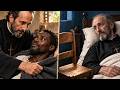
Fr. Edward J. Flanagan
(1886-1948)

The Ryan Report, released in May, opened a window into a shameful part of our heritage as Catholics, the abuse of children in so many institutions run by Catholic Religious Orders. However, it is as much a part of our Catholic heritage as any other. It is part of what makes us what we are and we must ensure that we learn from it in order to become what we should be - and what we should have been all along.

To say that some were different should not minimize the sufferings of children or the wrongs of abusers. It should show us that we can always choose what is right, even in the midst of wrongdoing.

Father Edward J. Flanagan was different. He was the world-famous founder of 'Boys' Town' in Nebraska. It was not because of his fame that he was different but because of his sense of goodness and his courage to live up to that sense. Because he was different, President Harry S. Truman asked him to undertake a tour of Asia and Europe in the immediate aftermath of the Second World War to assess the plight of children - and to assess what might be done to alleviate that plight.

While travelling, he stopped off in Ireland. His visit to Ireland wasn't part of the official itinerary. It was simply a visit to the land of his birth, as he passed through Europe. However, because he was different, because he could not be indifferent to the situation of children, while in Ireland, he visited some of the institutions that housed them. His reaction was a stark condemnation of those institutions and the system that controlled them.

Because of the Hollywood film Boys' Town, released in 1938, ten years before this mission, Fr. Flanagan was treated like a National hero and a media celebrity - at first. Addressing a packed auditorium in Cork's Savoy Cinema, Fr. Flanagan said: "You are the people who permit your children and the children of your communities to go into these institutions of punishment. You can do something about it."

He called Ireland’s penal institutions "a disgrace to the nation," and later said "I do not believe that a child can be reformed by lock and key and bars, or that fear can ever develop a child’s character." He also condemned the Industrial School system as “a scandal, un-Christlike, and wrong,” adding that the Christian Brothers had lost its way.

The Irish Minister for Justice later stated: “I am not disposed to take any notice of what Monsignor Flanagan said while he was in this country, because his statements were so exaggerated that I did not think people would attach any importance to them.” Sadly, in that last point, he was correct.

Fr. Flanagan died in Berlin in 1948 while on this mission for the children of the world.

Some were different from the men and women who abused children under the veil of Religion or who hid that abuse under the same veil. The rest, the rest of us, it seems, were indifferent at best.

We participate in the sin of another: by counsel; by command; by consent; by provocation; by praise or flattery; by concealment; by partaking; by silence; by defense of the ill done.

We are forgiven our sins: by acknowledging our fault; by confessing our guilt; by our sorrow and our repentence; by purposing amendment; by reparation for the harm done.

Our Lady, Comfort of the Afflicted, pray for us!

Saturday, 20 June 2009

Blessed Peter O'Higgins, O.P.

Blessed Peter O'Higgins, O.P.


The Dominican Peter O'Higgins, of the Priory of Yeomanstown between Newbridge and Naas, on the banks of the River Liffey, was beatified with 16 other Irish Martyrs on 27th September, 1991. Today is their collective feast day.

In his Historical Sketch of the Persecutions Suffered by the Catholics of Ireland Under the Rule of Cromwell and the Puritans, Rev. Dr. Patrick Francis Moran as he then was, Vice Rector of the Irish College in Rome and later Cardinal Archbishop of Sidney, gives the following account of the martyrdom of Blessed Peter O'Higgins:

F. Peter O'Higgins belonged to the order of St Dominick and in 1641 he was led to the scaffold for the Catholic faith in the court yard of Dublin Castle. We will allow father Dominick O'Daly to describe the scene of his suffering:- "This pious and eloquent man," thus writes O'Daly, in 1655, "was arrested and brought before the lords Justices of Ireland on a charge of endeavouring to seduce the Protestants from their religion. When his accusers failed to sustain any capital charge against him, the men in power sent to inform him that if he abandoned his faith he might expect many and great privileges; but all depended on his embracing the Protestant religion. From the first he knew well that they had resolved on his death; but it was on the morning of the day fixed for his execution that the messenger came to him with the above terms."

"O'Higgins in reply desired to have those proposals made to him under the signature of the Justices, and requested, moreover, that it should be handed to him in sight of the gibbet. The lords Justices hearing this, together with the order for his execution, sent the written document for pardon on the aforesaid condition. Now when the intrepid martyr had ascended the first step of the ladder leading to the gibbet the executioner placed the paper in his hand. He bowed courteously on receiving it, and loud was the exultation of the heretical mob who thought he was about to renounce the Catholic faith; but he standing on the scaffold, exposed to the view of God and man, exhibited to all about him the document he had received, and commenting with warmth on it, convicted his impious judges of their own avowed iniquity."

"Knowing well that there were Catholics in the crowd, he said addressing them:- 'My brethren, God hath so willed that I shonld fall into the hands of our relentless persecutors. They have not been able, however, to convict me of any crime against the laws of the realm; but my religion is an abomination in their sight, and I am here to-day to protest, in the sight of God and man, that I am condemned for my faith. For some time, I was in doubt as to the charge on which they would ground my condemnation; but, thanks to Heaven! it is no longer so, and I am about to suffer for my attachment to the Catholic faith. See you here the condition on which I might save my life. Apostacy is all they require but, before high Heaven I spurn their offers and, with my last breath, will glorify God for the honour He has done me in allowing me thus to suffer for His Name.' Then, turning to the executioner, after having cast the Justices autograph to the crowd, he told him to perform his office, and the by-standers heard him returning thanks to God, even with his latest breath. Thus did iniqnity lie unto itself - thus did the martyr's constancy triumph." (From History of the Geraldines by Dominick de Rosario O'Daly, O.P., originally written in Latin, and printed at Lisbon in 1655; translated by Rev. C.P. Meehan, and printed in Dublin in 1847. See also De Burgh's Hib. Dom., page 561.)

In the aforementioned The Geraldines, Earls of Desmond, and the Persecution of the Irish Catholics, translated from the original latin, with notes and illustrations, by Rev. C. P. Meehan, in the footnote to page 251, where the martyrdom of another Dominican in 1651 in Clonmel is recounted, we read:

Thomas O Higgins was put to death in the year 1651. In the Hib. Dom. p 561 there is mention made of Peter O Higgins, who was slain for no other crime than that of being a Dominican Friar. His death took place in the year 1641, immediately after the rising of the Catholics. The mortal remains of this victim were denied sepulture in the city of Dublin; and as the friends of the murdered priest were carrying him to a burial place outside the walls, the partisans of the Lords Justices shattered the lifeless head with their muskets. Acta Capituli Generalissimi. Romae, 1644. p. 119.

Blessed Peter O'Higgins, pray for us!

Friday, 19 June 2009

Opening of the New Holy Year

The Holy Year announced by the Holy Father in March for Priests begins today. In preparation, St. Conleth's Catholic Heritage Association has distributed copies of a prayer written by Revd. Fr. William Doyle, S.J., M.C.

That prayer runs thus:

O my God, pour out in abundance Thy spirit of sacrifice upon Thy priests. It is both their glory and their duty to become victims, to be burnt up for souls, to live without ordinary joys, to be often the objects of distrust, injustice, and persecution.

The words they say every day at the altar, "This is my Body, this is my Blood," grant them to apply to themselves: "I am no longer myself, I am Jesus, Jesus crucified. I am, like the bread and wine, a substance no longer itself, but by consecration another."

O my God, I burn with desire for the sanctification of Thy priests. I wish all the priestly hands which touch Thee were hands whose touch is gentle and pleasing to Thee, that all the mouths uttering such sublime words at the altar should never descend to speaking trivialities.

Let priests in all their person stay at the level of their lofty functions, let every man find them simple and great, like the Holy Eucharist, accessible to all yet above the rest of men. O my God, grant them to carry with them from the Mass of today, a thirst for the Mass of tomorrow, and grant them, ladened themselves with gifts, to share these abundantly with their fellow men. Amen.

The Life of Fr. Doyle, written by Prof. Alfred O'Rahilly, is available here.

Sunday, 14 June 2009

Ninth Monthly Mass in the Diocese of Kildare and Leighlin


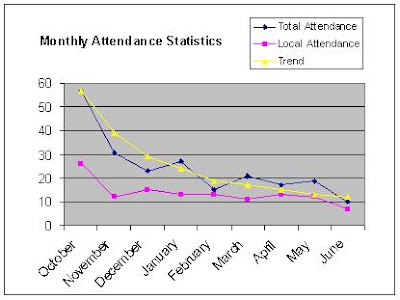
The ninth monthly Mass in the Diocese of Kildare and Leighlin took place today. The congregation numbered 10, including one young toddler. The celebrant, one server and the sacristan were also there.

The Ecumenical Value of the Gregorian Rite


A letter to the President of the International Una Voce Federation from a representative of one of the Orthodox Churches has just been posted.

UPDATE: Another view.

Saturday, 13 June 2009

The Holy Father's Homily for Corpus Christi

Last Thursday, at the Mass at the Latern Basilica in advance of the Blessed Sacrament Procession through the streets of Rome to the Liberian Basilica, Our Holy Father the Pope gave a homily in Italian of which this is a translated extract:

"St. Leo the Great reminds us that "our participation in the Body and Blood of Christ leads to nothing other than to become that which we receive" (sermo 12, De Passione, 2,7, PL54). If this is true for every Christian, it is so for an even greater reason for us priests. To be the Eucharist! Let this very thing be our constant desire and task, so that at the offering of the Body and Blood of the Lord, we accomplish on the altar, there comes also the sacrifice of our existence. Every day, we draw from the Body and Blood of the Lord that free and pure love which makes us worthy minister of Christ and witnesses to His joy. And this is what the faithful are waiting for from the priest: the example, indeed, of an authentic devotion for the Eucharist; the love to see him spend time in long pauses of silence and of adoration before Jesus as did the Cure of Ars, whom we will remember in a special way during this now imminent Priestly Year."


Blessed be Jesus in the Most Holy Sacrament of the Altar!

Thursday, 11 June 2009

The Sequence of Corpus Christi

As is well-known, the feast of Corpus Christi was instituted at the request of Our Lord to St. Juliana of Liège on the Thursday after Trinity Sunday. Pope Unban IV, who instituted the feast, had been Archdeacon of Liège before his election. It is also well known that St. Thomas Aquinas, the Doctor Angelicus, was asked to compose the Mass and Office of the feast. His compositions were not only theological and artistic masterpieces but they have provided the Church and the Christian Faithful with several of the most universally popular hymns in honour of Our Lord in the Blessed Sacrament.


Among those compositions, is the Adoro Te Devote, Pange Lingua, Sacris Solemnis and Verbum Supernum. Sadly, not as universally popular is the Sequence of the Mass of Corpus Christi Lauda Sion Salvatorem. Indeed, perhaps the only part of it that has entered the popular repertoire are the few lines Ecce Panis Angelorum, factus cibus viatorum: vere panis filiorum, non mittendus canibus that have frequently been set to music independently of the rest of the Sequence.

This is also true in the case of the Pange Lingua, which, although the full hymn is memorably used on Holy Thursday, the last two verses form the Benediction hymn Tantum Ergo, which is a stock favourite. Likewise, in Sacris Solemnis, the sixth verse gives us the famous Panis Angelicus, and the hymn of Benediction O Salutaris is found towards the end of Verbum Supernum.


The second video clip is the popular and most common version of Ecce Panis Angelorum, while the third is the setting by the famed Don Lorenzo Perosi.


In speaking of the Sequences of the Roman Missal, the Catholic Encyclopedia says: Each of the five has its own special beauty; but the "Lauda Sion" is peculiar in its combination of rhythmic flow, dogmatic precision, phraseal condensation."

In common with the other Sequences, Lauda Sion is double strophed. That is, it repeats the same melody in two lines before moving to another melody for the next two lines. This doubled strophing, or strophe and counter-strophe pattern that sets the Sequence apart from the hymn. Effectively, each strophe/counter-strophe would have been sung alternately by the two liturgical choirs. Such double strophing is found frequently in the Books of the Old Testament, particularly in the non-Major Prophetic Books, Hosea, Amos and Job being particular examples.

Saturday, 6 June 2009

St. Coca of Kilcock

Dr. Comerford's entry on the Parish of Kilcock begins thus:

"Derives its name from St. Coca, virgin, whose chief feast was celebrated on the 6th of June. We find her name calendared in the Martyrology of Donegal also, at the 8th January: "Cuach, virgin, of Cil-Cuaigh in Cairbre na Ciardha;" and again, in the same, under date April 29th : "Coningen, i. Cuach i. Ci Finn Maighi." A gloss on this passage states that the maiden Coinengean, or Cuach, was the pupil or Daltha of Mac Tail, Bishop of Kilcullen. She is stated to have been sister of St. Kevin of Glendalough, of St. Attracta, and other saints. (See Loca Patr.,p. 150.note.) Colgan, it should be added, considers that this was a different person from the Patron Saint of Kilcock. In the life of St. Ciaran of Saighir, it is stated that "he used to go to the sea rock that was far distant in the sea (where his nurse, i,e., Coca, was), without ship or boat, and used to return again." St. Coca was identified with this locality from a very early date... The Holy Well of the Saint, called Tubbermohocca, stood in what is now an enclosed yard in the town."

The well of St. Coca, which appears to have been in the yard of what was the Christian Brothers' Monastery in the Square, seems to have been covered over some time in the nineteenth century.

Tradition has it that St. Coca embroidered vestments for Saint Colmcille.

St. Coca of Kilcock, pray for us!

One Year On...

Today, as well as being the feast of St. Coca of Kilcock, is also the first anniversary of this blog. In the past year, 4 contributers have published 100 posts. 12,092 visits have been made to the blog by 7,099 unique visitors.

Of the last 500 visitors, 35.9% were from Ireland, 22.4% were from the United States, 16.2% were from Britain, 5.2% were from Canada, 2.9% were from Sweden, 2.8% were from France, 2.4% were from Italy, 2.1% were from Australia, and a delightful 2% from the Holy See!

Among our most faithful returning visitors have been from Portlaoise (Ireland), Preston (England), Pisa (Italy), Paris (France) with no less than three such, Justice-equality-lawreform-ireland (Ireland), Toulouse (France), Dept Of Environment Dr Allocation (Ireland), Dublin (Ireland), and Mountmellick (Ireland), each with more than 20 recent visits.

Google was the search engine for 90.1% of recent visitors by search engine, with AOL, Bing and Yahoo about equal. Vodafone-ireland-mobile-isp was the mobile server of our most frequent mobile visitors, followed closely by Eircom Ltd. (Ireland), both with over 40 recent visits each. The Hermenutic of Continuity, Forest Murmers and Brendan Allen were the source of a great number of the most recent guests.

Indicentally, our two associated blogs had reached 21,357 (http://www.fsspvocations.blogspot.com/) and 81,514 (http://www.tradvocations.blogspot.com/) by this morning.

St. Brigid, St. Conleth and St. Coca pray for the contributers, for the visitors and for the friends who showed them the way! May everything they publish and every internet visit they make redound to the Greater Glory of God, the honour of His Blessed Mother and the good of souls!

Saturday, 30 May 2009

The Hymn and Sequence of Pentecost

Devotion to the Holy Ghost, it is sometimes claimed, was in ecclipse before the Second Vatican Council. With the multiplication of sins against the Holy Ghost and the loss of understanding of what they are, we might wonder if the Holy Ghost would agree. At any rate, what is unchallengable is that the music of Pentecost in the Gregorian Rite is among the most powerful of invocations and tributes that man has to offer to God. The Hymn of Pentecost Veni Creator Spiritus and the Sequence of Pentecost Veni Sancte Spiritus are among the most memorable pieces of the Church's repertoire. The first clip presents the familiar Gregorian Chants.


In the second clip, we hear Maurice Duruflé's variations on the theme of the Veni Creator. The French School of Organists, perhaps the supreme expression of Organ music, and of which Duruflé (1902-1986) and Dupré (1886-1971) were possibly the last giants, is famed for its variations. Even in it's basic forms, such as the Noël, variations upon Christmas Carols, the French School prides itself upon the skill of variations upon a theme. To obtain a post as 'titulaire' or official organist of one of the many great Cathedrals of France, it would be necessary to improvise, or create a spontaneous variation, upon a theme before the examiners.


Duruflé himself, friend of the great Louis Vierne (1870-1937), transcribed three improvisations by Vierne, who, as 'titulaire' of Notre Dame de Paris, was the acknowledged master of improvisation. In the third clip, we hear Dupré improvising upon the theme of Veni Creator at the organ of St. Suplice, where he was 'titulaire' for 37 years. Dupré's compositions, which include several Noëls and other variations, were declared by the great organist Widor to be unplayable, such was their complexity and technical difficulty. In a similar vein, when Vierne first heard the improvisations of Dupré, he declared that they sounded composed.


The great traditions of Ecclesiastical Organ Music have been lost almost entirely to the Church. Like Gregorian Chant, we may all have the opportunity to hear recordings in our own home but it is a rare thing that we have the opportunity to hear the Organ played fittingly in its own proper setting and played to the glory of God in our own Parish Churches.


To look, for a moment, to other forms of art, the next clip is taken from an odd but oddly Catholic 1948 film 'Portrait of Jennie,' a vehicle for Jennifer Jones who had played St. Bernadette in 'Song of Bernatette' five years earlier. It is the story of a painter who finds his inspiration in the apparition of a girl, the eponymous Jennie, who reappears to him, each time grown a little more. The theme is one of time and its interaction with eternity but hardly an orthodox treatment. However, the film co-stars Ethel Barrymore, from the great Catholic Hollywood dynasty and features the great Lillian Gish, herself a past pupil of the Ursuline Nuns, as Sister Mary of Mercy, one of Jennie's teachers. In this clip we see Joseph Cotton, the painter, drawn by Jennie to her Convent school to witness the profession of some of the Dominican Sisters while the students sing the setting of the Veni Creator composed by Fr. Lambiotte, S.J.


The final clip shows part of the controversial film 'A Nun's Story'. About three minutes in, there is a snatch of the Salve Regina. Towards the end of this clip, the ceremony of first profession contains both an improvisation upon the hymn and the first verses of the Veni Creator itself. As an aside, this film is a fairly faithful account of the traditions of Western religious life - a universal and living tradition at the time it was made in 1959. It is also a relic of a time when Hollywood took pains to present the Church's practices correctly. It was produced at the end of the era of Fr. Daniel A. Lord, S.J., and the Legion of Decency, an era when men were men and Popes were Pius.

Monday, 25 May 2009

Monsignor Mario Marini

It has been reported that Msgr. Mario Marini, Secretary of the Pontifical Commission Ecclesia Dei, has died. Of your charity, pray for the repose of his soul.

Monsignor Marini was a Priest of the Archdiocese of Ravenna-Cervia. In March 2007, he was appointed as Adjunct Secretary of the Pontifical Commission and later succeeded Msgr. Perl as Secretary. Up to that time, he had been Undersecretary of the Congregation for Divine Worship and the Discipline of the Sacraments. He had previously worked in the Secretariat of State and the Congregation for the Clergy. He was also a canon of the chapter of the Vatican Basilica. He was 72 years old.

Requiem aeternam dona eis, Domine: et lux perpetua luceat eis.


Saturday, 23 May 2009

Requiem Mass for Bishop Thomas Keogh

The mist was descending from the Blackstairs Mountains, standing at a distance but looking every inch of their grim title, as the minibus brought us from the train in Bagenalstown towards the small country Church of Our Lady of Lourdes in Skeoughvosteen to celebrate, to remember and to pray for one of its favourite sons, Thomas Keogh, who was Bishop of Kildare and Leighlin for thirty years.

Skeoughvosteen, or 'Skeough' (pronounced Sh-kee-oc), as it is known, meaning thorn-bush, Skeough, of the hound, vosteen, is not easily found on a map but it is fully worth the search.

This place - there is no village - sits atop a moderately sized hill. From the churchyard (weather permitting) there are stunning views over the vales of Kilkenny to the west (first 'landscape' shot) and Carlow to the east and the Blackstairs of Wexford beyond (second 'landscape' shot).

The churches of this part of the Diocese, outside the major towns, are simple structures from the outside but they all bear the signs of centuries of devotion.

This church, built about 1825 - that is, about 4 years before Catholic Emancipation - has four entrances, two on either side of the west gable (customarily one side for ladies and one for gentlemen) and one at the western wall of each transept. The western gable is surmounted by a small campanile.

Inside, the most interesting and unique features of this church are the transepts, which are 'stalled'. That is, they contain stepped stalls.

These are separated from the rest of the church by a low wooden partition. In the corner of the transept to the right is a statue of the Christ with His Sacred Heart in what appears to be white marble, and in the corner of the transept to the left, a statue of the Blessed Virgin in a similar style.

Across almost the entire width of the Sanctuary there is a reredos in a classical idiom with four columns and two pillasters of the roman doric order flanking the tabernacle, from which the Altar has been moved forward. Although the columns are correct, fluted and channelled, they are surmounted by an entablature that is devoid of triglyphs, although the entablature is expressed that those points.

Over all, a rounded broken pediment contains a chalice and host motif. A modern ceiling makes the pediment appear almost oppresively high but was likely in better proportion to the original. The rounded broken surmounting pediment of the reredos is echoed in the rounded pediment of the tabernacle decoration. The tabernacle doors are embossed with the Agnus Dei and surmounted by the Heart of Jesus.

As with Vicarstown, the windows are of interest in the Church of Our Lady of Lourdes. Indeed, there is a certain similarity of composition. Two windows in the side walls of the Sanctuary are fully coloured, as is a more modern window in the west gable, the precise meaning of which is difficult to interpret but the rich blues, traces of gold and dynamism of the composition could indicate Mary Mediatrix.

The windows in the Sanctuary are in a traditional style. On the left of the Sanctuary, the more customary side for the image of greater dignity, the image of Christ and His Sacred Heart appears in a benediction pose above St. Patrick, mitred with crosier. On the opposit wall, the Madonna and Child appear above St. Brigid, patroness of Ireland and the Diocese of Kildare.

The rest of the windows are largely of clear glass but with subtil decoration consisting of, in the example shown here, a chalice motif above and the crown of thorns at the centre of the cross. It is probably going too far to call this clear-glass a local style but it is certainly a recurring feature in a number of churches in the Diocese. An equally plausible explanation is lack of means.

73 intrepid souls made their way to 'Skeough' this morning for a Requiem Mass in the Gregorian Rite or the Extraordinary Form on the day following the 40th Anniversary of the death of their late Bishop. Some came from the Archdiocese of Dublin and a few from the Diocese of Ossory, which is nearby, but the great majority of those who came to pay their respects were of his own flock many of whom, including the celebrant, would have been confirmed by the man they came to honour.

Similarly, both the celebrant of the Mass and the deacon for the day were Priests of the Diocese of Kildare and Leighlin, as was also the intended Subdeacon.

The Priest who was to have been Subdeacon was prevented from doing so on account of an accident a few days earlier. We prayed for him on the way back from 'Skeough'. However, the two performed their duties with the reverence and attention of three. The full gregorian proper and common of the Requiem were performed correctly, although more voices would have been preferable.

The sermon was a reflection upon time and upon the Priesthood. This Mass marked, almost to the day, the 40th anniversary of the Bishop's death.

By a happy coincidence, the Mass was also just a few weeks short of the centenary of his ordination. We also heard that there were present Priests who had just celebrated or were about to celebrate 60 years of Priesthood and 40 years of Priesthood. As the Year for Priests was about to begin, we were given the opportunity to remember the precious and dedicated service of Priests, particularly Bishop Keogh, whose soul we prayed for at this Mass.

Incensation of the Gifts

Once again, I was very heartened to hear the local Mass times announced and everyone was encouraged to attend Mass on Sundays and Holydays of Obligation.

There is no opportunity so slight that this reminder can't be made with value. Some misguided souls can slip into the habit of missing Mass just because they can't attend it in the Gregorian Rite. God is too good and the Mass is too precious to put even our legitimate preferences before our obligations of Religion.

Lord, this is an awe-filled place, says Jacob as he awakes from a dream in the Book of Genesis. The Church puts these words into our mouths for the consecration of a Church. We awoke from a dream today to see the ancient Rites of Holy Mother Church performed once again in an ancient House of God, to pray for the soul of our deceased Bishop. Surely, in the words of the Epistle of the Mass, from the Second Book of the Maccabees, it is a holy and a wholesome thing so to do.

Fota II International Liturgy Conference

We are happy to inform you of the following:

St. Colman’s Society for Catholic Liturgy will host the second international liturgy conference at the Sheraton Hotel, Fota, Co. Cork on 12-13 July 2009. The conference is entitled Benedict XVI on Sacred Art and Architecture. It will explore the theological, philosophical and historical background of the principles of Christian art and architecture as presented in the writings of Joseph Ratzinger –especially in his Introduction to the Spirit of the Liturgy and his Feast of Faith. The international conference will also be addressed by architects Prof. Duncan Stroik of Notre Dame University and Mr. Ethan Anthony of the prestigious Boston firm of architects Cram Ferguson. Both will explore the application of Joseph Ratzinger’s writings on church art and architecture in the context of building and decorating beautiful churches in the post Vatican II context.

The key note address will be made by His Eminence Cardinal George Pell, Archbishop of Sydney. He will present a comprehensive overview of the Pope Benedict’s writings on beauty in the context of the liturgy and Christian worship while emphasizing that beauty must necessarily be part of the liturgy is something of the glory of God is to be transmitted to man.

Professor Vincent Twomey, SVD, will chair the conference.

The theological, philosophical and historical background to Joseph Ratzinger’s thought on beauty in the liturgy will be explored in a series of papers presented by Dr. Joseph Murphy (St. Augustine’s theory of beauty), Fr. Daniel Gallagher (the aesthetics of St. Thomas Aquinas), Dr. Janeth Rutherford (Eastern Iconoclasm), Dr. Alcuin Reid (on Noble Simplicity), Fr. U. M. Lang (on Louis Bouyer) and Dr Helen Dietz.

The question of the practical application of Ratzinger’s principles of Christian art and architecture will be addressed by Prof. Duncan Stroik, Notre Dame University, and by Mr. Anthony Ethan of the architectural firm of Cram Ferguson.

Prof. Duncan Stroik is one of the leading exponents of neo classical architecture in the United States and has been to the forefront in promoting the principles of classical architecture in contemporary church building. Stroik’s architectural practice grows out of a commitment to the principles of classical architecture and humane urbanism. He is considered to be one of the foremost educators and practitioners in Catholic architecture. It is Stroik’s belief that a revival of sacred architecture is central to any true renaissance of architecture and civil society. Two primary examples of Stroik’s work can be seen in the Shrine of Our Lady of Guadalupe at La Crosse, Wisconsin and in the Chapel of Our Lady of the Holy Trinity at Aquinas College, Santa Paola, California.


Mr. Ethan Anthony is principal partner in the prestigious Boston firm of architects HDB/Cram and Ferguson whose speciality is the design and construction of traditional religious architecture and the design of religious interiors. The company has been to the forefront of religious architecture in the United States for more than 120 years. Ethan Anthony is a primary exponent of the architectural principles of the neo-Gothic and Romanesque. He has designed numerous new traditional churches and interiors and has gained a national reputation for his work in liturgical architecture. Primary examples of his work would include Syon Abbey, Cooper Hill, Virginia and Our Lady of Walsingham, Houston, Texas.

Registration for the Conference is now open and may be made on line at http://www.scscliturgy.com/, by e-mailing St. Colman’s Society at colman.liturgy@yahoo.co.uk or by contacting the Secretary at [00353] 021 4813445.

Wednesday, 20 May 2009

St. Clement Mary Hofbauer

On this day, one hundred years ago, St. Pius X canonised St. Clement Mary Hofbauer, C.Ss.R., Apostle of Vienna.

St. Clement Mary Hofbauer, pray for us!

Saturday, 16 May 2009

Requiem for Bishop Thomas Keogh

Bishop Thomas Keogh (1884-1969)
We take this opportunity to remind you that a Requiem Mass will be celebrated in the Church of Our Lady of Lourdes, Skeoghvosteen, Co. Kilkenny, Ireland, at 12 noon on Saturday, 23rd May, 2009, for the repose of the Immortal Soul of Bishop Thomas Keogh, late Bishop of Kildare and Leighlin, who died on 22nd May, 1969.


On the occasion of his Episcopal Consecration, on 18th October, 1936, Bishop Keogh said: "There is one thing that I ask of you and it is this: I know the power of prayer, and I want you to pray for me that I may be able to fulfil the responsibilities of my office. I want you to pray and to pray always that, with God’s help, I may be able to fulfil the duties of an onerous and strenuous office so that when I stand before the Tribunal of Christ I may not be a failure." Irish Catholic Directory, 1937, pps 628-629.

Chavagnes International College Open Week

We have been asked to let you know about the Summer Open Week of Chavagnes International College from 4th – 9th July 2009.

Chavagnes International College is a Catholic Boarding School for boys location in Western France. Why not come along for a week and experience an insight into life at the college. By following classes and taking part in our array of extracurricular activities (choir, sport clubs including boxing, rugby, horse riding and football, photography club, literary club, IRISH LANGUAGE CLUB etc) we hope to showcase exactly what our school can offer the next generation of Catholic gentlemen. Cost: €95 / £75


Information for US families: http://internships.catholicstudyabroad.com/

Sunday, 10 May 2009

Eighth Monthly Mass in the Diocese of Kildare and Leighlin


A glorious Summer's afternoon was the setting for the eighth monthly Mass in Newbridge.


The Church of Our Lady (Cill Mhuire in Irish - which is also the Irish name of Kilmurry near Clane, Co. Kildare) was designed by Delaney Architects, Newbridge, and built by McGoff's of Naas. It was built in 1982, during the Pastorate of the late Very Reverend Father Laurence Newman, P.P., to meet the needs of the expanding population in the area.


The foundation stone on the wall of the sacristy reads in Irish:

CILL MHUIRE
Ba é an Dochtúir Ró-Oirmhoimeach Pádraig Ó Lionáin, D.D.
Easbag Chill Dara agus Leighlinne
a bheannaigh agus a leag an chloch bhoinn seo
17 Deireagh Fomhair, 1982

Which reads in English:

CHURCH OF OUR LADY
It was the Most Reverend Doctor Patrick Lennon, D.D.
Bishop of Kildare and Leighlin
who blessed and laid this foundation stone
17 September, 1982

Ballymany is the name of one of the six ancient Parishes that makes up the territory of the present Parish of St. Conleth's, Newbridge, the others being Morristown Billar, Great Connell, Old Connell, Kilashee and Carnalway. Cill Mhuire is a little over 3 miles from Fr. Moore's Well, to which St. Conleth's Catholic Heritage Association made a pilgrimage last July.


The style of the Church is distinctly modern, basically hexagonal in plan, with a sloping roof that reaches its highest point over an off-centre apse, to the 'Epistle side' of the Altar, that contains the tabernacle. The Church has a seating capacity of 800, which is roughly similar to that of the two other Churches in the Parish, St. Conleth's Parish Church (1852) and St. Eustace's Dominican Church (1966).


The stained glass windows are in an abstract style representing themes from Psalms 148 and 149 by Lua Breen, who , being a past pupil of the Dominican College in Newbridge, might be said to have continued the traditions of what might almost be called a 'Dominican School' of plastic arts begun by Fr. Henry Flanagan, O.P., a noted sculptor.

Commenting has been suspended on this blog for the time being, due to a poisoned-comments campaign. During the course of last night, this blog received its 10,000th hit.

Saturday, 9 May 2009

St. Garbhan of Clonshambo and Athgarvan

Regarding Clonshambo in the Parish of Kilcock, Dr. Comerford tells us:

Cluain-seann-both, i.e., "the meadow of the old tent or hut"); this parish may have derived its name from the hermit’s cell of one of the saints who made it their abode. St. Garbhan, brother of St. Kevin of Glendalough, was culted here on the 14th of May. In the Life of St. Kevin it is related that at one time he was inclined to wander about as a pilgrim, but St. Garbhan (probably of Clonshanbo) prevented him by observing that "it was not by flying, birds hatched their eggs.

The patron saint of this district is St. German; the parochial register has "Parochia Sti. Germani de Clonshanbo;" and in Bishop MacGeoghegan’s list of parish churches, compiled about 1640, we find Ecclesia Sti. Germani de Cluenseannbo set down.

Which of the saints of that name was patron here it is not easy to determine. St. Patrick having preached the Gospel in this locality, gives probability to the supposition, that St. German, Bishop of Auxerre, the great spiritual guide under whose direction our National Saint prepared himself for the future Apostleship of Ireland, some say, for 14 years, others, for so many as 30 years, - is meant. Another opinion is that St. German, nephew of St. Patrick, who helped him in his missionary labours, and was afterwards the first Bishop of the Isle of Man, was the saint honoured at Clonshanbo. There is yet another theory on this subject. In the Life of St. Ciaran of Saighar, mention is made of a holy hermit named Geaman, or Gemman, who is called German by Colgan, and is identical with a bard of that name "who lived in Leinster, near the confines of Meath."

It is related that St. Columba, after receiving the Holy Order of Deaconship in the monastery of St. Finian of Mohill, set out for Leinster, and became a pupil of this Gemman, then advanced in years, and after passing some time with him, he entered the monastic school of Clonard (Loca. Patr., p.298). Between these three the choice seems to lie. The second-name is honoured in the Martyrology of Tallaght, at the 30th of July: German MacGuill."

Regarding Athgarvan in the Parish of Newbridge, he also relates

Father Shearman (Loca Patr. Gen. Tab. 10p.180) surmises that the name of this place may be derived from St. Garbhan (Ath-Garbhan, i.e., “the Ford of Garbhan”), nephew of St. Finnan of Clonard, and kinsman of St. Kevin of Glendalough. This Saint, whose feast was assigned to May 14th, was identified also with Clonshambo, as already stated in the Paper on Kilcock."

St. Garbhan of Clonshambo and Athgarvan, pray for us!

Sunday, 3 May 2009

The Feast of St. Conleth - Close of the Year of Vocation

The Year of Vocation announced by the Archbishops and Bishops of Ireland closes today, which is the feast of St. Conleth of Kildare in the Traditional Calendar for the Diocese of Kildare.

Don't forget the two blogs established by St. Conleth's Catholic Heritage Association to mark this year: FSSP Vocations and Traditional Vocations.

During the Year of Vocation, FSSP Vocations received 19,963 hits from 11,724 unique visitors, of whom, 1,516 returned at least once more. Over the same period, Traditional Vocations received 75,401 hits from 36,089 unique visitors, of whom, 7,528 returned at least once more. Soli Deo Gloriam!


Tuesday, 28 April 2009

Pray for Cardinal Cañizares Llovera


Reports have appeared of the hospitalisation of His Eminence, Antonio, Cardinal Cañizares Llovera, who was appointed Prefect of the Congregation for Divine Worship and the Discipline of the Sacraments in December '08. His Eminence recently celebrated a Pontifical High Mass in the Gregorian Rite at the Papal Altar of the Latern Basilica for the Franciscans of the Immaculate. Cardinal Cañizares Llovera is a great friend of the Gregorian Rite and deserves our urgent prayers for his speedy recovery.