Saturday, 25 October 2008

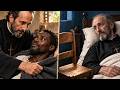
Saint Natfrioch of Kildare

Saint Natfrioch of Kildare

A monastery for the canons of St. Augustine was founded at Kildare, of which St. Natfrioch is said to have been the first Abbot – he was the Priest who attended the institution of St. Brigid before the appointment of its first Bishop – he is spoken of as the companion of St. Brigid, and to have remained with her all his life, notwithstanding the superintendence of Conlaeth, and it is also stated that he was wont to read in the refectory while the nuns were at their meals.

P. 486, Ecclesiastical History of Ireland by Rev. Thomas Walsh

Saint Natfrioch of Kildare, pray for us!

Tuesday, 21 October 2008

China (20th) Jubilee of the FSSP

Several members of St. Conleth's Catholic Heritage Association were in Rome to celebrate with the Priestly Fraternity of Saint Peter the 20th Anniversary of their Foundation.


Some members of the Irish Sodality of Our Lady can be seen (above) at the top right in their blue cloaks. The ceremonies were held in the Church of the Fraternity's Personal Parish in Rome, Santissima Trinita dei Pellegrini (the Church of the Most Holy Trinity of the Archconfraternity of Pilgrims), located near the Piazza Farnese. In the Sanctuary (seen below at Solemn Vespers), the Altarpiece is The Holy Trinity painted by Guido Reni in 1625.


A Pontifical High Mass (below) was celebrated on Saturday, 18th October, by His Eminence, Darío Cardinal Castrillón Hoyos, President of the Pontifical Commission Ecclesia Dei.


It will be remembered that His Eminence, at a Press Conference in London, on 14th June, 2008, was asked by a reporter from the english Daily Telegraph newspaper: "So would the Pope like to see many ordinary parishes making provision for the Gregorian Rite?" His Eminence replied as follows:

"All the parishes. Not many - all the parishes, because this is a gift of God. He offers these riches, and it is very important for new generations to know the past of the Church. This kind of worship is so noble, so beautiful - the deepest theologians’ way to express our faith. The worship, the music, the architecture, the painting, makes a whole that is a treasure. The Holy Father offers to all the people this possibility, not only the groups who demand it, but so that everybody knows this way of celebrating the Eucharist in the Catholic Church."

Source: Website of the Latin Mass Society of England and Wales.

Ad multos annos, your Eminence!

Saturday, 18 October 2008

St. Ethbin of Kildare

St. Ethbin was born in Great Britain; and died in Kildare about the year 600. He was of noble birth. His father died when he was only about 15 years of age. His widowed mother then entrusted his education to his countryman, Saint Samson of Dol Abbey in Brittany.

One day, while Ethbin was at Mass, he really heard the words: "Every one of you that cannot renounce all that he possesses, cannot be my disciple." He immediately resolved to renounce the world. Because he was a deacon, Ethbin sought the permission of his bishop to withdraw from the world. Upon receiving it, Ethbin retired to the abbey of Taurac. This was about the year 554.

For his spiritual director, this saint chose another: Saint Winwaloë. The community of Taurac was dispersed by a Frankish raid in 556 and Winwaloë died soon thereafter.

Ethbin then crossed over to Ireland, where he led the life of a hermit for 20 years in a forest near Kildare, now unidentifiable, called Nectensis. Historically, there was no cultus for Saint Ethbin in Ireland. His relics are claimed by Montreuil and Pont-Mort in France. The date assigned to his feast, for example, in the Martyrology of Donegal, is 19th October.

St. Ethbin of Kildare, pray for us!

Sunday, 12 October 2008

First Monthly Mass in the Diocese of Kildare and Leighlin

The First Monthly Mass in the Extraordinary Form provided by the Diocese of Kildare and Leighlin took place this afternoon a little after 1 p.m. in the Church of Our Lady (Cill Mhuire), Newbridge, Co. Kildare, Ireland.


Following intensive publicity in print and radio media by the Diocesan Communications Office, a congregation of almost 60 was in attendance. That congregation of almost 60 included the Most Reverend Bishop James Moriarty of Kildare and Leighlin, as well as Fr. Brendan Gerard, FSSP, resident in Rome, who was celebrant and who preached a short homily, together with Mr. John Heather, from Dublin.

Also in the congregation were Mr. Kieron Wood of the Sunday Business Post, together with his family, from Dublin, and Mr. David McEllin, former Chairman of both the Latin Mass Society of Ireland and Ecclesia Dei - Ireland, also from Dublin. The music was provided by the Lassus Scholars from Dublin.

Bishop Moriarty welcomed the many people who had come from Dublin for this Mass but noted that it cannot be expected that they will attending Mass in Kildare in the future.

Saturday, 11 October 2008

Christus Vincit! Christus Regnat! Christus Imperiat!

Announcing the forthcoming issue of 'Christus Regnat', the journal of St. Conleth's Catholic Heritage Association. Articles will include:
  • Most Reverend Bishop Thomas Keogh, D.D.

  • The Origins of the Laudes Regiæ

  • Tranquillity and the Sacrifice of Calvary

  • Roman Conference Report
Potential contributors or subscribers can obtain further details from: catholicheritagegroup@catholic.org

Thursday, 9 October 2008

50th Anniversary of Pope Pius XII


On this day in 1958, His Holiness, Pope Pius XII died. Ar dheis Dé go raibh a anam uasail.

Sunday, 5 October 2008

Bishop invites priests for Latin Mass

At the invitation of Bishop Moriarty and in response to Pope Benedict's Apostolic Letter Summorum Pontificum, priests from the Priestly Fraternity of St. Peter will celebrate a Latin Mass for the faithful of the Diocese attached to the older ("extraordinary") form of the Roman Rite (liturgical books of 1962). This Mass will be celebrated on the 2nd Sunday of every month in Cill Mhuire Church, Newbridge, Co. Kildare, beginning on Sunday, 12th October, at 1.00 p.m.

From St. Conleth's Parish Newsletter for Sunday, 5th October, 2008.

Most Extraordinary!

Soli Deo Gloria!

Thursday, 2 October 2008

St. Erk of Slane

St. Erk of Slane, Bishop
Friend of St. Brigid of Kildare, co-consecrator of St. Conleth, first Bishop of Kildare.

“St. Erk, ‘the sweet spoken judge’, was, in all probability, a native of Munster; and is said to have been page to King Laoghaire at the time he showed this respect to St. Patrick. [Lanigan, vol. 1, p. 346] He was consecrated some time before the year 465, and was the first bishop of the ancient diocese of Slane, and abbot of the monastery which was erected there by St. Patrick. He is said to have been the preceptor of St. Brendan, and was an intimate friend of St. Brigid. At the synod of Magh-Femyn, in Tipperary, it is related that Erk spoke highly of the great abbess of Kildare, and of the miraculous favours with which she was endowed by the Almighty. He assisted at the consecration of Conlaeth, first bishop of Kildare, and took an active part in all the ecclesiastical movements of the age… Colgan says that, in the old calendars, Ercus is treated of on 2nd of October and 2nd of November Probus, writing of him in the tenth century, says: “Hercus, filius Dego, cujus reliquae nunc venerantur in civitate, quae vocatur Slane.”

From: The Diocese of Meath, Ancient and Modern, by Rev. A. Cogan, C.C., Published in Dublin, 1862.

St. Erk of Slane, pray for us!

Saturday, 27 September 2008

13th Annual Novena

“Each year, the Association shall keep a novena for the perpetuation of the Traditional Latin Liturgy from 29th September to 7th October.” From the Statutes of St. Conleth’s Catholic Heritage Association.

In 1996, in preparation for their first request to the Bishop of Kildare and Leighlin for the regular provision of the Traditional Latin Mass for the people of the Diocese, a novena of prayer and penitence was made. The letter was delivered to the Bishop’s House on the last day of the novena.

This year, the theme of the novena is: “What earlier generations held as sacred, remains sacred and great for us too, and it cannot be all of a sudden entirely forbidden or even considered harmful. It behooves all of us to preserve the riches which have developed in the Church’s faith and prayer, and to give them their proper place.” From the Holy Father’s letter to Bishops accompanying Summorum Pontificum.

You are invited to join by your prayers and penances in this novena for the perpetuation of the Traditional Latin Liturgy – particularly in the Diocese of Kildare and Leighlin.

Forgotten Saints

The Feast of the All the Saints of Ireland is celebrated on 6th November. Very many of the Saints of Ireland are still remembered by the people today but very many more are forgotten. This may be for two reasons, first, because of their multitude in number, since the celebration of the feast of each Saint of Ireland would surely deprive us of the opportunity to celebrate so many Saints on the Universal Calendar of the Church, and, secondly, because the brilliance of many outshines the luminous sanctity of so many more.

“Archbishop Usher, on the authority of some very old and authentic manuscript, which throws much light on our ancient ecclesiastical history, divides the saints who flourished in Ireland during the fifth, sixth, and seventh centuries into three classes.

Dr. Lanigan is of opinion that this catalogue was written before the year 715, the period at which the disputes about the tonsure and the Paschal cycle had concluded.

The first class consisted of one hundred and fifty bishops, who were all founders of churches and eminent for sanctity. Those bishops were Romans, Britons, Franks, and Scots (Irish)… This class was called most holy.

The second class commenced from the year 542, the latter end of the reign of Tuathal, and continued to AD 598 or 599. This class consisted of three hundred saints, few of whom were bishops, the greater part having been priests… This order was called very holy.

The third order of saints consisted or holy priests and a few bishops, in all one hundred in number, who dwelt in deserts, and lived on herbs, water, and alms… The first order (or class) most holy; the second very holy; the third holy. The first burns brightly like the sun, the second like the moon, and the third like the stars.”

From: The Diocese of Meath, Ancient and Modern, by Rev. A. Cogan, C.C., Published in Dublin, 1862.

However, these holy men and women should not be forgotten.

“…we are greatly helped not only by theological investigation but also by that great heritage which is the “lived theology” of the saints. The saints offer us precious insights which enable us to understand more easily the intuition of faith, thanks to the special enlightenment which some of them have received from the Holy Spirit…” John Paul II, Novo Millennio Ineunte, 27

“The saints are like beacons; they show men and women the possibilities open to human beings. They are therefore also culturally interesting, independently of the cultural, religious or investigatory approach to them.” Cardinal José Saraiva Martins, C.M.F., Prefect of the Congregation for the Causes of Saints

We hope to restore to memory some of the Saints associated with the Diocese of Kildare.

Saturday, 13 September 2008

The Benedictine Nuns of the Abbey of St. Michael at Kergonan

You can see their video here.


Saturday, 6 September 2008

Annual General Assembly

The Annual General Assembly of St. Conleth’s Catholic Heritage Association will be held next Friday, 12th September. For further details contact: catholicheritagegroup@catholic.org.

Saturday, 23 August 2008

Feast of Saint Philip Benizi

Don’t forget!!!

Mass in St. Paul’s Church, Emo, Co. Laois, Ireland, at 11 a.m., on Saturday, 30th August. The Bishop of Kildare and Leighlin has granted the Plenary Indulgence of the Holy Year of St. Paul to all those who attend this Mass, under the usual conditions.

After Mass, we also hope to visit Emo Court, which is an estate across the road from St. Paul’s Church. The house was built in 1790 by James Gandon for the Earls of Portarlington. The house and grounds are now maintained by an agency of the Irish State, the Office of Public Works. Our visit coincided with ‘Heritage Week’, so please let us know if you are planning to attend, so that we can let the staff know in advance how large our group will be. E-mail: catholicheritagegroup@catholic.org

Saturday, 16 August 2008

Feast of Saint Joachim

A certain Joseph Cardinal Ratzinger celebrated the Traditional Latin Mass and ordained Priests for the Priestly Fraternity of Saint Peter some years ago. Where does a Cardinal go from there?

Monday, 11 August 2008

Pauline Year

Saint Conleth’s Catholic Heritage Association invites you to honour the Holy Year of St. Paul by attending Holy Mass in the Traditional Latin Rite (Missal of Blessed John XXIII) on Saturday, 30th August, 2008, at 11 a.m., in St. Paul’s Church, Emo, Co. Laois, Ireland, followed by a tour of Emo Court House and Gardens. The Plenary Indulgence for the Holy Year of St. Paul has been granted, under the usual conditions, by the Bishop of Kildare and Leighlin, to all the faithful who attend this Mass.

For the past 15 years, St. Conleth’s Catholic Heritage Association has been working prayerfully for the provision of the Traditional Latin Liturgy in the Diocese of Kildare and Leighlin.

Saturday, 19 July 2008

Report on the Walking Pilgrimage

On Saturday, 12th July, with the kind permission of the Parish Priest of Allen, 52 souls gathered in St. Brigid’s Church, Milltown, Co. Kildare, Ireland, for the celebration of the Holy Sacrifice of the Mass by Revd. Fr. Desmond Flanagan, Ord. Carm., according to the Missal of Blessed John XXIII.

The Bishop of Kildare and Leighlin granted the Plenary Indulgence of the Holy Year of St. Paul to all those who attended the Mass, under the usual conditions.

The Church at Milltown has the rare distinction of having been built in 1817, before Catholic Emancipation, that is to say, it was built while Catholicism was still an illegal practice in Ireland.

It was in the same Parish that several of the Bishops of Kildare hid during the centuries of persecution known as the Penal times. Bishop James Doyle wrote of it on 6th of May, 1823: “I am here placed in the centre of an immense bog, which takes its name from a small hill under whose declivity the chapel and house are built, where I now write. What perhaps interests me most in the wide and vast expanse of the Bog of Allen is, that it afforded, for nearly two centuries, a place of refuge to the apostolic men who have gone before me in preaching the faith, and administering the sacraments to a people in every respect worthy of such pastors. The haunts and retreats frequented by the Bishops of Kildare in the times of persecution are still pointed out by aged inhabitants of these marshes with a sort of pride mingled with piety; and they say-‘There he administered Confirmation; here he held an assembly of the clergy; on that hill he ordained some young priests, whom he sent to France to Spain, to Italy; and we remember, or we heard, how he lived in yonder old walls in common with the young priests whom he prepared for the mission. He sometimes left us with a staff in his hand, and being absent months, we feared he would never return; but he always came back, until he closed his days amongst us. Oh! If you saw him; he was like St. Patrick himself.’ What think you, my dear friend, must be my reflections on hearing of the danger, and labours, and virtues of these good men, and what a reproach to my own sloth, and sensuality, and pride! They of whom the world was not worthy, and who went about in fens and morasses, in nakedness, and thirst, and hunger, and watching, and terror, will be witnesses against me for not using to the best advantage the blessings which their merits have obtained from God for their children. Their spirit, indeed, seems to dwell here, and in those remote and uncultivated districts there are found a purity and simplicity of morals truly surprising. From five to six o’ clock this morning the roads and fields were covered with poor people, young and old, healthy and infirm, hurrying to see the Bishop, and assist at his Mass, and hear his instructions. They thought he should be like those saints whom they had seen or heard of to have gone before him” (Quoted in Dr. Comerford’s history of the Dioceses of Kildare and Leighlin)

Surely, this Mass would not have been unfamiliar to our forefathers in the Faith.

A view from the pews.

Following Mass, 16 members and friends of St. Conleth’s Catholic Heritage Association participated in a walking pilgrimage for vocations, as part of their efforts to mark the Year of Vocations that has been proclaimed by the Archbishops and Bishops of Ireland, running from Vocations Sunday 2008 (13th April) to Vocations Sunday 2009 (3rd May).


Follow Peter! The pilgrims were led by a Papal Flag.

Pilgrims sang hymns and prayed the Holy Rosary and Litanies as they walked. The first stop was Fr. Moore’s Well. This Holy Well is near the site of the house of Fr. John Moore (1779-1826), who was Curate of the Parish of Allen and much reputed for sanctity of life and the power to heal, particularly to heal those afflicted with ailments of the head. His hat, which is now kept in Westmeath, is a precious relic of this saintly Priest, said to carry this healing power. Fr. Moore’s well is still a popular place of pilgrimage.

Pilgrims make the ‘rounds’ of the Well.
The site of the original Well is next to the pool used for prayer by pilgrims.
Votive offerings left at the shrine at the Well.

Leaving Fr. Moore’s Well, the pilgrims headed for the Curragh Plains. This is a glacial outwash plain of about 5,000 acres. The Curragh is steeped in history. In particular, it is associated with St. Brigid of Kildare, Secondary Patroness of Ireland, to whose Convent in Kildare the lands of the Curragh were attached by means of a miraculous bargain with the King of Leinster. Colgan tells us that St. Brigid was granted as much land as her mantle would cover in return for having cured the King of Leinster of a deformity. It is said that when her mantle was spread it covered the present Curragh.

In the 12th Century, Geraldus Cambrensis wrote: “There are also here the most delightful plains, which are called the pasturage of St Brigid, into which no one dares to enter a plough and of which it is estimated as a miracle that although the cattle of the whole province may have clipped the grass close to the ground in the evening it will appear the next morning as high as ever, and it has been said of these pastures: 'As much as the herds crop during the long day, so much does the cold dew restore during the short night'.”

The head of the pilgrimage reaches the Curragh.

Saturday, 5 July 2008

Feast of Saint Anthony Mary Zaccaria

REMINDER!

On Saturday, 12th July, St. Conleth’s Catholic Heritage Association is organising a Walking Pilgrimage for Vocations, commencing at 11 a.m. in St. Brigid’s Church, Milltown, County Kildare, Ireland, with the Holy Sacrifice of the Mass in the Extraordinary Form of the Roman Rite (Missal of Blessed John XXIII).

After Mass, the walkers will make their way via Fr. Moore’s Well, near the Curragh Plains, to St. Brigid’s Well, Kildare Town, Ireland, where the pilgrimage will conclude. This is a distance of about 6 miles.

You are welcome to attend all or any part of the day’s events. If you are planning to walk, please let the Vocations Promoter know at: catholicheritagegroup@catholic.org

Pray for fine weather!

Saturday, 21 June 2008

Feast of Saint Aloysius Gonzaga

Cardinal Castrillón-Hoyos celebrates the Traditional Latin Mass in Westminster Cathedral

During his visit to England, His Eminence, who is the President of the Vatican Commission entrusted with provisions for the Traditional Latin Liturgy, made a number of important pronouncements on the future of the Traditional Latin Liturgy, or the “Gregorian Rite” as he refers to it.

In his address to the Annual General Meeting of the Latin Mass Society, His Eminence said:

“…The Holy Father is aware that in different places around the world many requests from priests and lay faithful who desired to celebrate according to the ancient rites were often not acted upon. That is why he has now authoritatively established that to celebrate according to the more ancient form of the liturgy – the Holy Sacrifice of the Mass as well the sacraments and other liturgical rites – is a juridical right, and not just a privilege accorded to all.

Certainly this must be done in harmony with both ecclesiastical law and ecclesiastical superiors, but superiors also must recognise that these rights are now firmly established in the law of the Church by the Vicar of Christ himself. It is a treasure that belongs to the whole Catholic Church and which should be widely available to all of Christ’s faithful…”

The Daily Telegraph reports His Eminence replied to a question about the Traditional Latin Mass in ordinary Parishes saying: “Not many parishes – all parishes. The Holy Father is offering this not only for the few groups who demand it, but so that everybody knows this way of celebrating the Eucharist,” adding that “People don’t know about it, and therefore they don’t ask for it,” but saying that a stable group could consist of as few as three people, and they need not come from the same parish. Let us pray that His Eminence’s next tour date is Carlow Cathedral.

Pictures of His Eminence’s visit can be found here. His Eminence’s homily at that Mass can be found here [PDF].

God bless His Eminence, Cardinal Castrillón-Hoyos! God preserve our Holy Father Pope Benedict XVI!

Saturday, 7 June 2008

Tradition on the March

On Saturday, 12th July, St. Conleth’s Catholic Heritage Association is organising a Walking Pilgrimage for Vocations. Commencing at 11 a.m. in St. Brigid’s Church, Milltown, County Kildare, Ireland, with the Holy Sacrifice of the Mass in the Extraordinary Form of the Roman Rite (Missal of Blessed John XXIII).

After Mass, the walkers will make their way via Fr. Moore’s Well, near the Curragh Plains, to St. Brigid’s Well, Kildare Town, Ireland, where the pilgrimage will conclude. This is a distance of about 6 miles.

You are welcome to attend all or any part of the day’s events. If you are planning to walk, please let the Vocations Promoter know at: catholicheritagegroup at catholic.org.

St. Conleth’s Catholic Heritage Association wishes to express thanks to Fr. Moore, the present Parish Priest of Allen and namesake of the Parish Priest of Allen for whom the Holy Well is named, for permission to have the Holy Sacrifice of the Mass in St. Brigid’s Church, Milltown.

St. Conleth’s Catholic Heritage Association also wishes to express thanks to Dr. Moriarty, Bishop of Kildare and Leighlin, for granting the Plenary Indulgence for the Pauline Holy Year, under the usual conditions, to those attending this Mass.

Friday, 6 June 2008

Introduction

St. Conleth’s Catholic Heritage Association aims at safeguarding the rich liturgical heritage of the Catholic Church and promoting its use in the sacramental life of the Church in the Diocese of Kildare and Leighlin. In effect, this means that we seek the full implementation of Summorum Pontificum throughout the Diocese of Kildare and Leighlin, wherever there is a genuine pastoral need.

This blog will keep you informed of the activities of St. Conleth’s Catholic Heritage Association, and of progress made in implementing Summorum Pontificum, particularly throughout the Diocese of Kildare and Leighlin.

Posts will be made on the first weekend of the month.